A Sense of We | Join the Fellowship | Interview with Anna Mathur ͏ ͏ ͏ ͏ ͏ ͏ ͏ ͏ ͏ ͏ ͏ ͏ ͏ ͏ ͏ ͏ ͏ ͏ ͏ ͏ ͏ ͏ ͏ ͏ ͏ ͏ ͏ ͏ ͏ ͏ ͏ ͏ ͏ ͏ ͏ ͏ ͏ ͏ ͏ ͏ ͏ ͏ ͏ ͏ ͏ ͏ ͏ ͏ ͏ ͏ ͏ ͏ ͏ ͏ ͏ ͏ ͏ ͏ ͏ ͏ ͏ ͏ ͏ ͏ ͏ ͏ ͏ ͏ ͏ ͏ ͏ ͏ ͏ ͏ ͏ ͏ ͏ ͏ ͏ ͏ ͏ ͏ ͏ ͏ ͏ ͏ ͏ ͏ ͏ ͏ ͏ ͏ ͏ ͏ ͏ ͏ ͏ ͏ ͏ ͏ ͏ ͏ ͏ ͏ ͏ ͏ ͏ ͏ ͏ ͏ ͏ ͏ ͏ ͏ ͏ ͏ ͏ ͏ ͏ ͏ ͏ ͏ ͏ ͏ ͏ ͏ ͏ ͏ ͏ ͏ ͏ ͏ ͏ ͏ ͏ ͏ ͏ ͏ ͏ ͏ ͏ ͏ ͏ ͏ ͏ ͏ ͏ ͏ ͏ ͏
September 24th, 2026
_A newsletter by_ Anne-Laure Le Cunff
Hi friends,
For the past few months, I’ve been experimenting with ways to make the ideas we explore at Ness Labs more hands-on, with more live support and more opportunities to turn curiosity into action.
And I’ve finally landed on something I’m really excited about: the Ness Labs Fellowship.
Each month, we’ll meet for two live sessions to practice metacognition, notice the patterns and possibilities worth exploring, and turn those insights into tiny experiments.
Between sessions, you’ll have access to a private mastermind with other fellows and occasional Hypercuriosity Workshops where I’ll test new tools before deciding whether to include them in my next book.
The Fellowship is currently $249/year. And if the regular Ness Labs Membership is the right level of support for your experiments, nothing is changing: it’s staying at $49/year, with the same access to self-paced courses, coworking, and peer-learning sessions.
We’ll kick things off with a live call on October 1st, and I’d love to see you there!
To mark the launch, in this edition we explore the science of fellowship itself: what happens in our brains when we experience a sense of “we” and how to create more of that kind of connection in our lives. Enjoy!
— Anne-Laure
Already a Ness Labs member? Please upgrade to the Fellowship here instead so you’ll receive a prorated refund for the unused portion of your Membership.
My week has been full of human connection. Yesterday, I hosted a symposium and spent the morning learning from people from many different fields. The night before, I had a long phone call with someone who knows me well. And last weekend, I was back home with friends and family.
It’s also been an extremely busy week. And yet, I’ve been walking around with something I can only describe as an emotional and intellectual glow. Things feel lighter and ideas seem to come more easily. Problems feel more manageable. And this all made me curious about what human connection actually does to our brain.
Turns out, there’s quite a bit of research on this. Neuroscientists have found that positive social interactions engage neural systems involved in reward and in understanding other people. They can also help regulate our response to stress. One influential theory suggests that our brains treat trusted relationships as a resource: when we feel supported, the demands of life can become less costly to manage.
But being around people isn’t quite enough. A sense of “we” seems to matter. Research on social identity shows that identifying with a group – feeling that you belong rather than just being in the company of other people – is associated with lower loneliness and anxiety, and interventions that strengthen this sense of belonging can improve well-being.
That’s why a conference room full of strangers and an evening with people who feel like your people are psychologically very different experiences.
There’s also an interesting body of research on synchrony. Although we don’t quite understand how it works, studies suggest that our minds and bodies can become more coordinated with the people we interact with. When we talk, move or work together, we start to attune to one another.
But fellowship is more than social contact. Just being around people won’t necessarily produce these effects. Some of the strongest benefits seem to emerge when there’s mutual support, shared identity, shared activity and that feeling of: these are my people.
So how do we create more of it? Here are a few ways to build more fellowship into your life:
1. Find your tribe. Pay attention to the communities and people around whom you feel most like yourself, but also most alive, curious and engaged. They don’t have to think exactly like you. Fellowship means building relationships where there’s trust, mutual investment and some meaningful sense of “we.”
2. Experiment with different modes of connection. A conference, book club, long phone call or walk with friends all create different kinds of connection. Instead of treating “socializing” as one category, notice which forms of fellowship leave you more energized or grounded, and experiment with ways to make more room for those.
3. Create your own spaces of connection. You don’t have to wait for this sense of fellowship to hopefully develop somewhere in your life. Invite a few like-minded people over for dinner, or organize a coworking afternoon. Start a monthly tea, reading group or Sunday walk. Fellowship can start with one person deciding that it would be good for these people to spend more time in the same space.
We spend a lot of time thinking about how to manage our energy individually: sleep more, exercise, eat well, build better systems. But a lot of our energy comes from other people.
Fellowship is about noticing that and being more deliberate about the relationships, communities and shared experiences that make us feel more alive.
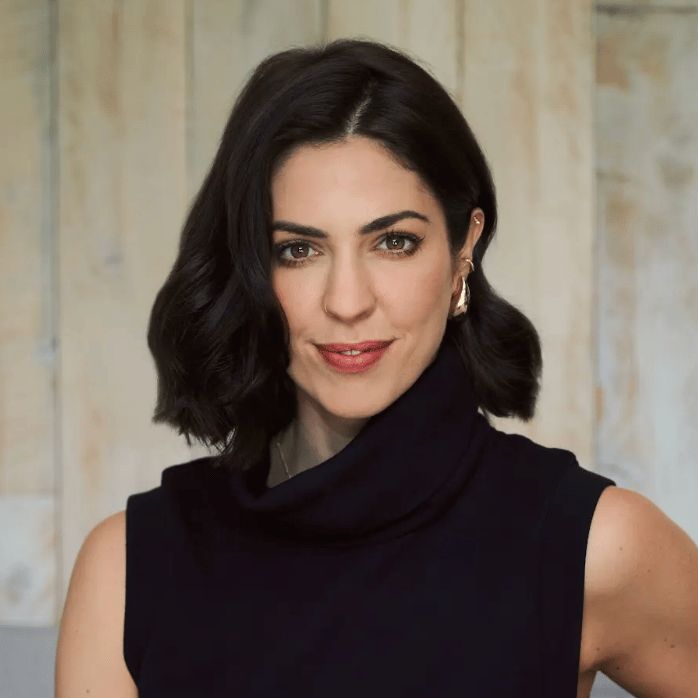
ANNA MATHUR
Each week I ask a curious mind about their habits, routines, and rituals. This week we learn from Anna Mathur, psychotherapist and author of How to Stop Snapping at the People You Love (As Well As the Ones You Don’t).
1. One daily practice you can’t do without? Moving my body intentionally, even for ten minutes. It resets my nervous system and metabolizes the stress that would otherwise sit within me and leak out sideways.
2. One mindset shift that transformed your work? As a people-pleaser in recovery, I’ve learnt to have better boundaries with what I’m saying yes to in my work, lessening the sense of stress, overwhelm and resentment as I’ve battled the unseen costs of taking on too much.
3. One idea that keeps you up at night? Realizing that if I want to parent with calm and consideration, I need to provide myself with calm and joy where I can, has changed my parenting and my life! Finding my joy, welcoming rest where I can, and meeting my own needs, is how I actively love myself and my children.
• Find more space between stimulus and response. Nervous System Mastery is a five-week live cohort, designed to help you notice your stress patterns, experiment with evidence-backed protocols, and practice what you learn with others in weekly live sessions. Applications close this Friday September 25th. Apply to join.
• Too many books. Not enough time. The hardest part isn't finding great books – it's finding time to read them all. Shortform helps you learn from bestselling nonfiction in about 20 minutes, with practical insights you can apply immediately. Start free.
• Anti-Networking comes to London. Most networking events optimize for volume: more intros, more conversations, more stimulation. Anti-Networking takes the opposite approach. Each event is designed to help you go deeper and walk away with one meaningful connection. The next one is in London on October 26th. RSVP here.
Many thanks to our sponsors and cross-promo partners for supporting the Ness Labs newsletter! Want to appear here? Please email support@nesslabs.com to learn more.
If you enjoy the newsletter, you’ll love our community of curious minds conducting tiny experiments within a safe space and learning together. Here is an overview of upcoming events (full calendar):
• Experimental Coaching with Anne-Laure. Come with your areas of uncertainty, leave with a tiny experiment you can start running straight away. The Fellowship kickoff session is on October 1st.
**• Use AI to actually improve your life and work.** Lia Golledge is an AI Growth Marketer and author of 34 books. In this workshop, she’ll share the AI experiments that have genuinely transformed how she learns, thinks, creates, writes, makes decisions, and grows her business.
**• Discover micropractices for instant wellbeing.** In this Author Session, Eli Susman will teach you what the science shows about tiny, repeatable shifts and how seconds of breath, awareness, movement, or touch can tilt an ordinary moment toward calm and clarity.
• Turn reflection into action. In this session, Gosia Fricze will help you explore how reflection can become a catalyst for meaningful change and how to move beyond insight alone.
• Design your self-leadership framework. Join William Collins for a conversation where you will learn how to understand your mind frames, how they impact your relationship with the future, and how to reframe them.
**• Make progress on your projects.** Join Kathryn Ruge for our Monday and Tuesday ‘body doubling’ coworking sessions to work on personal or work-related projects that you want to make progress on, covering all timezones. Ethan Miller is also hosting a cowriting session on Sunday this week.
**• Improve your knowledge management system.** Join our next PKM meeting where we learn from one another through sharing how our systems work in the real world and give new PKM users a leg up.
**• Host your own workshop.** Do you have an idea for a short presentation and Q&A or a workshop you’d like to trial? Test your first iteration in the Ness Labs community and get feedback. We promote all sessions here in the newsletter.
You received this email because you subscribed to the Ness Labs newsletter. “-ness” is a suffix that means “state of being”, as in aware_ness_, mindful_ness_, conscious_ness_. Ness Labs is a playground for curiosity – a place where you can learn how to experiment with ideas, explore creative projects, and reflect on your progress. Of course I don’t want to see you go, but you can unsubscribe at any time. If you do leave, I’d love an email to let me know what I could do better to improve the newsletter. Alternatively, you can update your profile to use a different email address. © Ness Labs, 600 1st Ave, Ste 330 PMB 92768, Seattle, WA 98104-2246.

