Why we need friction | Seeking more flow | Interview with Laurent Marbacher ͏ ͏ ͏ ͏ ͏ ͏ ͏ ͏ ͏ ͏ ͏ ͏ ͏ ͏ ͏ ͏ ͏ ͏ ͏ ͏ ͏ ͏ ͏ ͏ ͏ ͏ ͏ ͏ ͏ ͏ ͏ ͏ ͏ ͏ ͏ ͏ ͏ ͏ ͏ ͏ ͏ ͏ ͏ ͏ ͏ ͏ ͏ ͏ ͏ ͏ ͏ ͏ ͏ ͏ ͏ ͏ ͏ ͏ ͏ ͏ ͏ ͏ ͏ ͏ ͏ ͏ ͏ ͏ ͏ ͏ ͏ ͏ ͏ ͏ ͏ ͏ ͏ ͏ ͏ ͏ ͏ ͏ ͏ ͏ ͏ ͏ ͏ ͏ ͏ ͏ ͏ ͏ ͏ ͏ ͏ ͏ ͏ ͏ ͏ ͏ ͏ ͏ ͏ ͏ ͏ ͏ ͏ ͏ ͏ ͏ ͏ ͏ ͏ ͏ ͏ ͏ ͏ ͏ ͏ ͏ ͏ ͏ ͏ ͏ ͏ ͏ ͏ ͏ ͏ ͏ ͏ ͏ ͏ ͏ ͏ ͏ ͏ ͏ ͏ ͏ ͏ ͏ ͏ ͏ ͏ ͏ ͏ ͏ ͏ ͏
November 5th, 2026
_A newsletter by_ Anne-Laure Le Cunff
Hi Friends,
I recently moved house and spent much of the past few weeks assembling furniture. There are many skills I’m proud of, but this is definitely not one of them! Still, every time I look at the shelves I’ve put together, I feel a strange sense of satisfaction. Turns out, we can value a slightly crooked piece of furniture we’ve assembled ourselves more than a perfectly built one.
Yet more and more everyday tasks are being done for us. We order takeaway instead of cooking, get AI to write our emails, follow GPS instead of finding our own way, and let algorithms decide what to watch next. All of this saves us time and effort. And that’s a good thing, right?
Not necessarily. We spend our lives trying to make everything easier, yet some of the things that make life worth living require difficulty.
Psychologists have found that while we generally dislike effort, we also tend to value what it produces. A study found that putting effort into something can make the outcome feel more rewarding. Sometimes, we even choose difficult activities precisely because they challenge us. Think of running a marathon, learning an instrument, or building something from scratch. The effort isn’t just a cost we pay to get the reward; it can be part of the reward itself.
The problem is that we quickly get used to things getting easier. Researchers call this hedonic adaptation. When our circumstances improve, the initial boost in happiness often fades as our expectations adjust. What once felt like a luxury becomes our new baseline.
But a comfortable life can still feel empty if nothing challenges us or changes how we see the world. That’s why we shouldn’t chase a sense of comfort. Instead, researchers have proposed we should also optimize for psychological richness.
In essence, a good life isn’t just about feeling happy, but also about having interesting, varied, and perspective-changing experiences. And these experiences aren’t always pleasant. Sometimes they involve uncertainty, frustration, or struggle.
The answer isn’t to make life unnecessarily difficult, but to become more intentional about which difficulties we avoid.
• Start with tiny experiments. Research suggests that constantly escaping uncomfortable situations can reinforce our fears. Try something you’re not good at. Visit unfamiliar places without planning every detail. Experiments can act as a reminder that discomfort is something you can handle.
• Seek more flow. Flow has been linked to positive well-being, especially when you’re working on something challenging but within reach of your abilities. Playing music, writing, programming, or practising a sport can all create opportunities for flow. The sweet spot is being stretched just enough to grow.
• Add a little friction back into your life. Before asking AI to generate an idea, spend ten minutes thinking about it yourself. Before outsourcing a task, ask whether doing it might teach you something. Use tools to remove tedious work, but not the thinking, creating, and problem-solving that make the work meaningful.
Of course, not every struggle is worthwhile and there’s nothing inherently wrong with comfort. We need rest, safety, and moments when life asks nothing of us. My point isn’t to glorify being busy or stressed. But there’s a difference between making space for comfort and designing a life around avoiding discomfort.
As I look around my new home, I’m grateful for all the things that have made moving easier. But I’m also glad I spent those frustrating hours figuring out how to assemble the furniture myself. The shelves may not be perfect, but every time I walk past them, I feel a little proud.
So perhaps that’s the point here: sometimes, the things that challenge us are the very things that make us feel most alive.
Try this week’s tiny experiment to add some friction back into your life:
I will [jot down my thoughts before checking online] for [the next five days].
And if you don’t have time to write, it also works to just consciously ask yourself what you think for a few minutes, before reaching for an externally generated answer.

Out now! A proven framework by Tiago Forte for reflecting on your past, understanding your present, and creating the future you actually want.
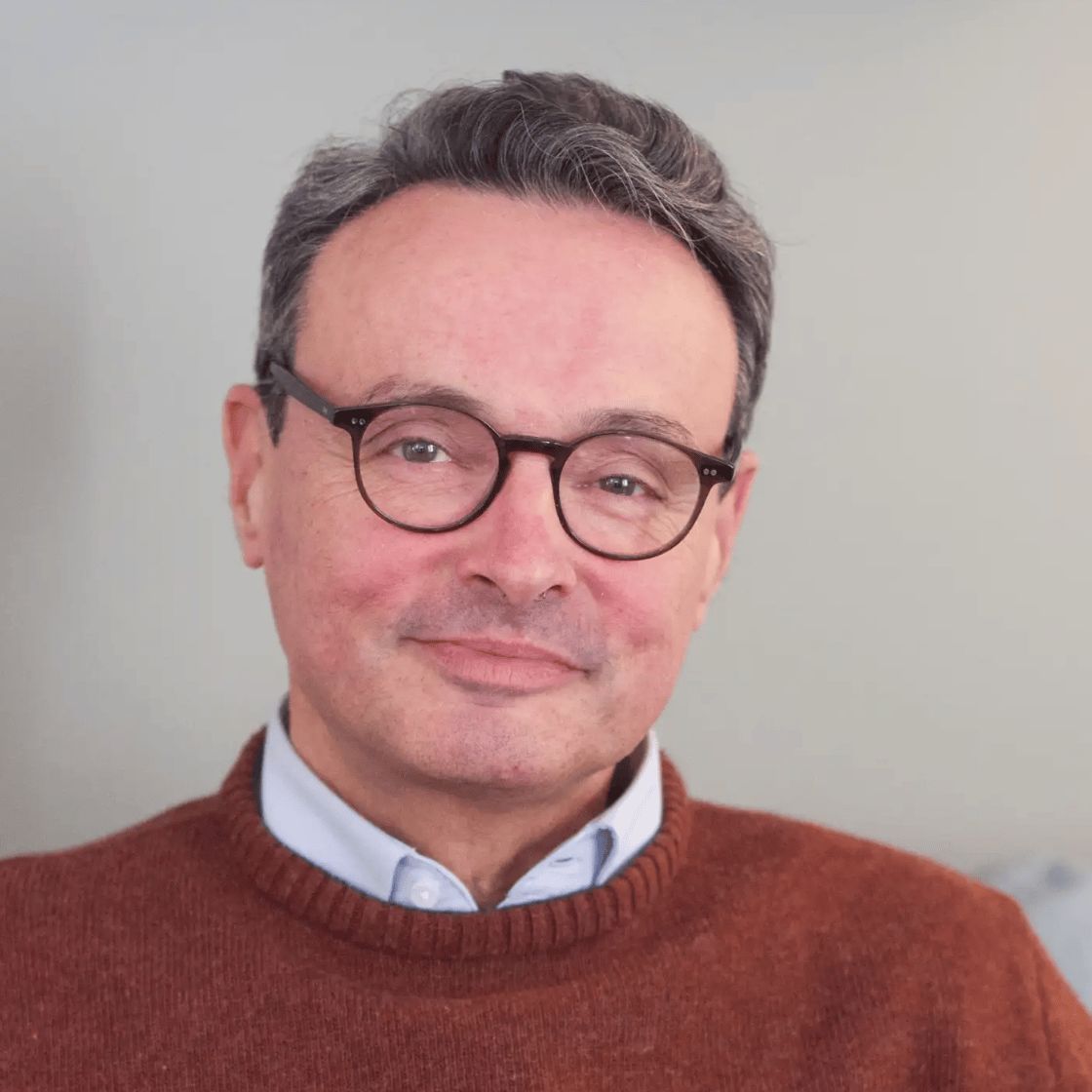
LAURENT MARBACHER
Each week I ask a curious mind about their habits, routines, and rituals. This week we learn from Laurent Marbacher, a senior advisor to business leaders and author of The Caring Company, which challenges purely transactional business models.
1. One daily practice you can’t do without? In our family, at dinner, we each share three things we’re grateful for that happened during the day. It’s a way to ground our conversations in gratitude and for each of us to take a moment to reflect on our day.
2. One strategy to restart your creative engine? Nature, nature, nature – whether in my vegetable garden or in the woods. The natural world can teach us so much wisdom!
3. One habit you wish you had? As Dr Kristin Neff, the self-compassion specialist, says, “We are so hard on ourselves.” I wish I had the habit of forgiving myself more regularly.
• What if your entire day was in one place? Red Urchin is a time and priority management system for tasks, meetings, goals, and calendar, balancing work and personal life. A method plus the software that runs it, refined since 2011. Simple processes, powerful outcomes. $12/month. Try it free for 14 days.
• A handwriting-first PKM notebook for iPad. Think on paper and keep everything digital with Zibaldone. Let on-device AI build your knowledge graph and uncover hidden connections while you enjoy a paper-like writing experience. Ness Labs readers get 50% off their first year of Pro with code NESSLABSNOV26. Try Zibaldone.
• A field guide for people rebuilding how they work, think, create, and live. Tony Volney writes about personal growth, creative work, reinvention, and becoming harder to fool, including by yourself. Read Permission to Be Powerful.
Many thanks to our sponsors and cross-promo partners for supporting the Ness Labs newsletter! Want to appear here? Please email support@nesslabs.com to learn more.
If you enjoy the newsletter, you’ll love our community of curious minds conducting tiny experiments within a safe space and learning together. Here is an overview of upcoming events (full calendar):
• Join our next live coaching session. Join me for one hour of interactive practices to develop an experimental mindset and apply tiny experiments to your personal and professional challenges. Our next session is on November 10, hosted as part of the Ness Labs Fellowship.
**• Learn how to be ambitious without rushing.** In this Ness Labs Membership session open to all community members, Gosia Fricze will help you explore the pressure to achieve things quickly, how rushing affects our relationship with ambition, and how to pursue what we want at a healthy pace.
**• Explore which thinking is worth keeping.** In this workshop, Rebecca Upsher will use metacognition to unpack a real task and notice the thinking, judgement and decision-making happening along the way, and then explore which parts of that thinking you want to keep and which you might want to share with AI.
**• Decide how to experiment with AI.** In this workshop, William Collins will help you run experiments around the way you think, and work with AI as scaffolding to explore questions that matter to you.
**• Craft your day to strengthen presence.** Join Matej Rumanovský for a workshop to begin shaping your own personal ritual for presence – something small, sustainable, and truly yours.
**• Make progress on your projects.** Join Kathryn Ruge for our Monday body doubling sessions to work on personal or work-related projects that you want to make progress on, covering all timezones. Can’t make it? Adriana Scalora is also hosting coworking sessions on Tuesday.
**• Design a healthy relationship with AI.** Natalia runs the AI Collective within the Ness Labs community, with fortnightly virtual meetups that encourage collective curiosity and sensemaking around AI.
**• Improve your knowledge management system.** Join our next PKM meeting where we learn from one another through sharing how our systems work in the real world and give new PKM users a leg up.
**• Host your own workshop.** Do you have an idea for a short presentation and Q&A or a workshop you’d like to trial? Test your first iteration in the Ness Labs community and get feedback. We promote all sessions here in the newsletter.
The Ness Labs Membership is $49/year for all peer-learning sessions and self-paced courses; the Ness Labs Fellowship is $249/year for live experimental coaching sessions and workshops taught by Anne-Laure. You can cancel any time.
You received this email because you subscribed to the Ness Labs newsletter. “-ness” is a suffix that means “state of being”, as in aware_ness_, mindful_ness_, conscious_ness_. Ness Labs is a playground for curiosity – a place where you can learn how to experiment with ideas, explore creative projects, and reflect on your progress. Of course I don’t want to see you go, but you can unsubscribe at any time. If you do leave, I’d love an email to let me know what I could do better to improve the newsletter. Alternatively, you can update your profile to use a different email address. © Ness Labs, 600 1st Ave, Ste 330 PMB 92768, Seattle, WA 98104-2246.

