The Three Fears | Courageous Curiosity | Interview with Anthony Klotz ͏ ͏ ͏ ͏ ͏ ͏ ͏ ͏ ͏ ͏ ͏ ͏ ͏ ͏ ͏ ͏ ͏ ͏ ͏ ͏ ͏ ͏ ͏ ͏ ͏ ͏ ͏ ͏ ͏ ͏ ͏ ͏ ͏ ͏ ͏ ͏ ͏ ͏ ͏ ͏ ͏ ͏ ͏ ͏ ͏ ͏ ͏ ͏ ͏ ͏ ͏ ͏ ͏ ͏ ͏ ͏ ͏ ͏ ͏ ͏ ͏ ͏ ͏ ͏ ͏ ͏ ͏ ͏ ͏ ͏ ͏ ͏ ͏ ͏ ͏ ͏ ͏ ͏ ͏ ͏ ͏ ͏ ͏ ͏ ͏ ͏ ͏ ͏ ͏ ͏ ͏ ͏ ͏ ͏ ͏ ͏ ͏ ͏ ͏ ͏ ͏ ͏ ͏ ͏ ͏ ͏ ͏ ͏ ͏ ͏ ͏ ͏ ͏ ͏ ͏ ͏ ͏ ͏ ͏ ͏ ͏ ͏ ͏ ͏ ͏ ͏ ͏ ͏ ͏ ͏ ͏ ͏ ͏ ͏ ͏ ͏ ͏ ͏ ͏ ͏ ͏ ͏ ͏ ͏ ͏ ͏ ͏ ͏ ͏ ͏
August 6th, 2026
_A newsletter by_ Anne-Laure Le Cunff
Hi friends,
I’m in the early stages of starting a new creative project (more on that soon) and I’ve noticed how tempting it is to stick to what I know, whether that’s the science I can speak about confidently or the questions that have clear answers.
This week, I want to explore why curiosity takes courage, including the very real social, psychological, and behavioral risks involved in asking new questions and venturing beyond our comfort zones, as well as how we can navigate those fears.
I’m also incredibly honored to have learned that Tiny Experiments has been shortlisted for the 2026 Business Book Awards. The jury described the book as “transformative” and “packed with tools to help you (...) apply your curiosity.”
I hope you enjoy this edition. Stay curious!
— Anne-Laure
I’m a neuroscientist who studies curiosity, and my research explores why we seek new knowledge and what happens when our drive to explore becomes unusually intense. And yet, I’m not always curious!
Some days, I almost hungrily seek new questions. On others, I notice myself avoiding them. I reach for a familiar explanation, stick to my existing assumptions, or decide that I would rather not know.
It’s interesting how different this is from childhood. Children investigate everything. They ask questions without worrying whether those questions are intelligent, useful, or appropriate.
Curiosity comes naturally to them because they have not yet learned all the reasons to suppress it. But as we grow older, asking questions can feel increasingly risky, and I have come to believe that this reluctance to follow our curiosity often comes down to three fears.
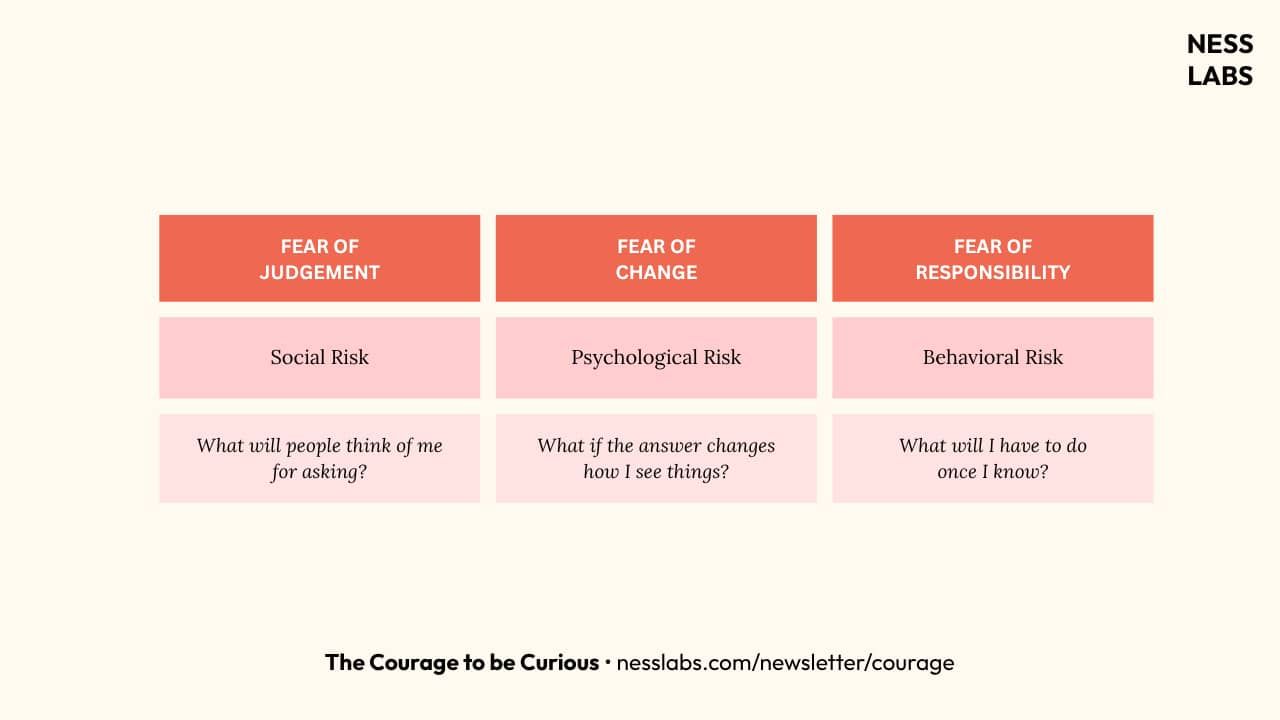
1. Fear of judgment: Curiosity creates social risk. Asking a question reveals that we don’t know something, and we may worry that others will see us as ignorant, naïve or unprepared. In environments that reward confidence and expertise, pretending to understand can feel safer than admitting uncertainty.
2. Fear of change: Asking a question leaves open the possibility that the answer will change us. We may discover that a belief is wrong, an ambition no longer matters, or a story about ourselves is outdated or incomplete. Curiosity can disrupt the certainty that helps us feel psychologically stable.
3. Fear of responsibility: Knowledge can create an obligation to act. Once we recognize that something isn’t working, we may need to make a decision or have a difficult conversation. Not being curious can help preserve our comfort, and sometimes our innocence and our ability to remain passive.
We can’t eliminate these fears, but we can create conditions that make curiosity feel safer.
First, find your curiosity circle. Spend time with people who reward questions rather than performances of certainty. A good curiosity circle gives you permission to think aloud, explore raw ideas, and change your mind. This is what this newsletter is providing for me.
Then, practice learning in public. Share what you’re exploring before you have mastered it. Write notes and describe how your thinking is evolving.
Learning in public gradually reduces the fear of judgment. It also helps others see that intellectual growth is not a straight line from ignorance to expertise, but an iterative process.
Lastly, turn your big fears into tiny experiments. Try a new approach for a week. Have one conversation. Test one assumption. Collect a little more information.
A tiny experiment turns curiosity into a manageable action for a specific duration. You don’t need to know where the question will lead. You only need enough courage to take the first step.
Curiosity came naturally when we were children. As adults, it can become a deliberate practice. Ask the question that feels slightly uncomfortable. Follow the thread you’ve been avoiding. And let yourself be changed by what you discover.
Try this week’s tiny experiment to practice courageous curiosity:
I will [share one question publicly every week] for [4 weeks].
You could share those with your colleagues or friends, via a newsletter, or on social media. You can even choose an area you’d like to explore deeper and choose questions to share that connect to that area of curiosity. Want to dig deeper? Get your copy of Tiny Experiments.
• You’re smart about your time everywhere except podcasts. How about the same podcasts in 1/10th the time? DistillCast turns every new episode of your podcasts into a 10-minute recap in your own podcast app. Built and curated by people who actually listen every day. You keep every podcast and can go full-length when it earns it. Free in beta, no card required. Hear it for free.
• Break free from inbox overwhelm. Meco is a newsletter aggregator designed to make reading feel calm, focused, and useful again. Bring all your favorite newsletters into one place, organize them with smart filters, and wake up to a personalized news briefing that surfaces the most relevant content at the right time. Take control of your inbox.
• Build a lasting community around your work. Earn a living online with Kit, the newsletter platform built for creators, by creators. Grow your audience, share what matters, sell digital products, and turn your ideas into a sustainable business, all from one simple platform. Get started today.
Many thanks to our sponsors and cross-promo partners for supporting the Ness Labs newsletter! Want to appear here? Please email support@nesslabs.com to learn more.
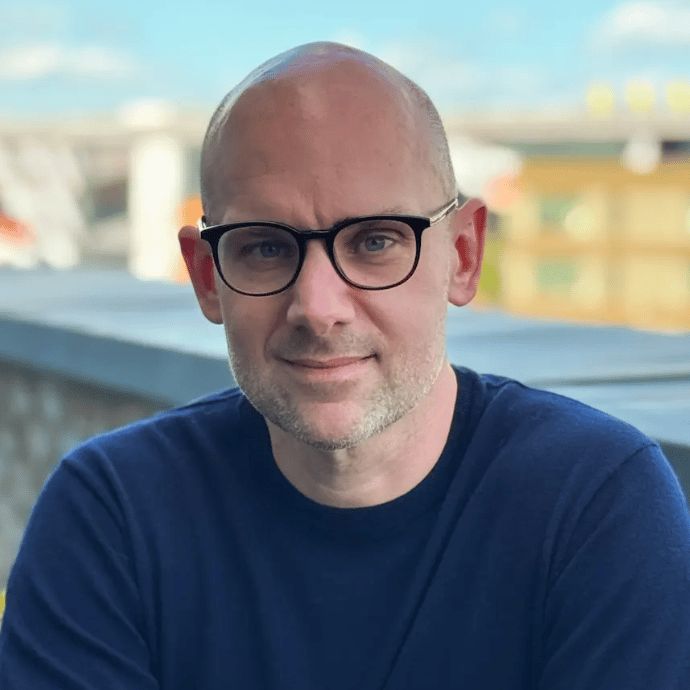
ANTHONY KLOTZ
Each week I ask a curious mind about their habits, routines, and rituals. This week we learn from organisational psychologist Anthony Klotz, professor of management and author of Jolted, which explores the science of why we quit and whether we should.
1. One daily practice you can’t do without? A quiet hour in the morning to start my day. It’s almost always dedicated to reading, but occasionally used to knock out the day’s most important task.
2. One strategy to restart your creative engine? Talking to people about how they’re experiencing life and work. It’s too easy to let weeks and months go by with my head down in research, but the most impactful research ideas are out there, in the lives of workers.
3. One anchor ritual to reconnect with yourself? A jog is always centering for me. There’s something about the combination of light exercise and the positive energy of others enjoying the park that makes me feel alive and grounded.
If you enjoy the newsletter, you’ll love our community of curious minds conducting tiny experiments within a safe space and learning together. Here is an overview of upcoming events (full calendar):
• Learn how to create when you feel stuck. In this guided session, Gosia Fricze will help you explore your main creative blocks and practical ways to reconnect with creativity when you’re feeling stuck.
**• Protect your mental health at work.** In this one-hour workshop, Adina Dinu will teach you the work factors that undermine your well-being, the differences between stress, burnout, and trauma, and healthy ways to respond to stress and adversity at work.
**• Make progress on your projects.** Join Kathryn Ruge for our Monday and Tuesday ‘body doubling’ coworking sessions to work on personal or work-related projects that you want to make progress on, covering all timezones. Ethan Miller is also hosting a cowriting session on Sunday this week.
**• Improve your knowledge management system.** Join our next PKM meeting where we learn from one another through sharing how our systems work in the real world and give new PKM users a leg up.
**• Host your own workshop.** Do you have an idea for a short presentation and Q&A or a workshop you’d like to trial? Test your first iteration in the Ness Labs community and get feedback. We promote all sessions here in the newsletter.
All of these and future events are included in the price of the membership (only $49 for one year), as well as access to our courses, workshop library, and a dedicated space to track your tiny experiments.
Until next week, take care!
Anne-Laure.
You received this email because you subscribed to the Ness Labs newsletter. “-ness” is a suffix that means “state of being”, as in aware_ness_, mindful_ness_, conscious_ness_. Ness Labs is a playground for curiosity – a place where you can learn how to experiment with ideas, explore creative projects, and reflect on your progress. Of course I don’t want to see you go, but you can unsubscribe at any time. If you do leave, I’d love an email to let me know what I could do better to improve the newsletter. Alternatively, you can update your profile to use a different email address. © Ness Labs, 600 1st Ave, Ste 330 PMB 92768, Seattle, WA 98104-2246.

