What we lose when we outsource discovery | New workshops in the community | Interview with Ben Meer ͏ ͏ ͏ ͏ ͏ ͏ ͏ ͏ ͏ ͏ ͏ ͏ ͏ ͏ ͏ ͏ ͏ ͏ ͏ ͏ ͏ ͏ ͏ ͏ ͏ ͏ ͏ ͏ ͏ ͏ ͏ ͏ ͏ ͏ ͏ ͏ ͏ ͏ ͏ ͏ ͏ ͏ ͏ ͏ ͏ ͏ ͏ ͏ ͏ ͏ ͏ ͏ ͏ ͏ ͏ ͏ ͏ ͏ ͏ ͏ ͏ ͏ ͏ ͏ ͏ ͏ ͏ ͏ ͏ ͏ ͏ ͏ ͏ ͏ ͏ ͏ ͏ ͏ ͏ ͏ ͏ ͏ ͏ ͏ ͏ ͏ ͏ ͏ ͏ ͏ ͏ ͏ ͏ ͏ ͏ ͏ ͏ ͏ ͏ ͏ ͏ ͏ ͏ ͏ ͏ ͏ ͏ ͏ ͏ ͏ ͏ ͏ ͏ ͏ ͏ ͏ ͏ ͏ ͏ ͏ ͏ ͏ ͏ ͏ ͏ ͏ ͏ ͏ ͏ ͏ ͏ ͏ ͏ ͏ ͏ ͏ ͏ ͏ ͏ ͏ ͏ ͏ ͏ ͏ ͏ ͏ ͏ ͏ ͏ ͏
October 15th, 2026
_A newsletter by_ Anne-Laure Le Cunff
Hi friends,
What do we lose when we outsource the process of discovery? This question has been on my mind these past few weeks, as I’ve followed the debate around OpenAI’s claims to have solved hundreds of longstanding mathematical problems.
As a hypercurious neuroscientist and writer, I know how much joy can be found in research and creative work. So beyond the very real practical concerns, I wanted to explore the human side of the debate: what happens to our curiosity and sense of meaning when machines start doing the work we love?
I don’t have all the answers, but I hope today’s essay opens up a conversation about what we might lose along the way of increasing productive efficiency at the cost of human curiosity.
I’m also excited to share an exclusive interview with Ben Meer, whose book just debuted at #1 on the New York Times bestseller list!
Enjoy the read, and most importantly... stay curious :)
— Anne-Laure
A few weeks ago, OpenAI published more than 700 AI-generated mathematics papers, containing hundreds of claimed breakthroughs on previously unsolved problems.
The reaction has been extraordinary. Some mathematicians see it as one of the most important developments in their field’s history, while others accuse OpenAI of undermining mathematical research and potentially damaging the very process by which mathematics advances.
I will only quickly cover the main practical complaints, as these have been discussed extensively elsewhere.
• OpenAI is overwhelming mathematicians with work it hasn’t verified. The repository currently lists 719 papers, but fewer than half of the main results have computer-checkable formal proofs. OpenAI has already withdrawn three papers after finding a mathematical error and revised another 14. Releasing results at this scale shifts a huge burden of verification onto mathematicians.
• OpenAI is claiming the rewards of discoveries built on others’ work. These problems weren’t solved in a vacuum: the AI builds on insights developed by human mathematicians. A researcher might dedicate much of their career to a difficult conjecture, sharing their progress along the way only for OpenAI to publish a solution first, capturing much of the credit (and potential commercial benefit).
• OpenAI risks making mathematical research dependent on a handful of private companies. As I describe in Chapter 11 of Tiny Experiments, mathematics has traditionally advanced through a relatively open research community, where mathematicians build on one another’s discoveries. Proprietary AI systems could concentrate control over mathematical discovery in a few powerful companies, allowing commercial priorities to influence which problems get solved.
These are very real concerns, and as someone who started her career in the tech industry, I hope the teams at OpenAI take stock of what happens when they unleash their shiny new toy on an entire field.
But as a neuroscientist who studies curiosity, what I’d like to explore in today’s newsletter is the psychological and emotional impact of seeing your entire field seemingly overtaken by machine intelligence.
This impact is already visible. A mathematician whose doctoral research centered on a conjecture OpenAI claims to have solved, has spoken about sadness and anxiety about his future career. Another who had hoped to spend years exploring a problem before OpenAI published a claimed solution wrote: “I feel a profound sense of grief for the working conditions I believed I would have.”
Why might this hurt so much? Because discovering something ourselves is different from simply being told the answer.
Research shows that “aha moments” are associated with activity in the brain’s reward circuitry. Having the opportunity to wrestle with a problem before being taught how to solve it also helps develop a deeper understanding so we’re better able to apply it to new situations. Lastly, curiosity helps us remember not just the answers we sought, but unrelated information encountered along the way. The journey towards an answer can teach us things we weren’t even looking for.
That journey of discovery isn’t just about developing an understanding, it’s also about finding meaning in our work. People who copy AI-generated writing report less ownership, confidence and meaning than those who write independently. In that same experiment, those who drafted their own work and used AI to improve it didn’t show the same drop. It suggests that the impact of AI feels different when we’re creating with it rather than just receiving its output.
Of course, you don’t need to be the first person in history to understand something to experience the joy of learning. Learning from other people’s discoveries can be deeply rewarding too, and AI could open extraordinary new directions for research in general.
But feeling that our work matters requires more than generating answers. We also need opportunities to exercise our abilities, follow our curiosity, make progress and contribute something of our own.
If mathematicians increasingly spend their careers checking and explaining discoveries produced by proprietary AI systems, we risk taking away some of the very experiences that make mathematical research meaningful.
This raises a much bigger question, one that goes far beyond mathematics: are we so focused on making intellectual and creative work more productive that we’re forgetting what makes that work meaningful to the people doing it?
I do think we need to seriously consider what happens when we optimize for the number of problems solved without taking into account the people who dedicate their lives to solving them. Mathematics may be one of the first fields confronting this question at such a dramatic scale, but it certainly won’t be the last.
So I’d like to open up the conversation here. What happens to our curiosity, motivation and sense of meaning when machines can increasingly do the work we love? And how do we make sure that, as these technologies advance, we don’t lose the human experiences that made us want to pursue that work in the first place?
Try this week’s tiny experiment to make more room for personal discovery instead of relying solely on AI:
I will [brainstorm my own ideas first before checking AI for an answer] for [the next two weeks]__.
Then, compare your own human-generated ideas to the machine-generated ones. This can help create a protected sandbox for creativity and critical thinking.
➤ Want to learn how to develop and maintain an experimental mindset? Get your copy of Tiny Experiments.
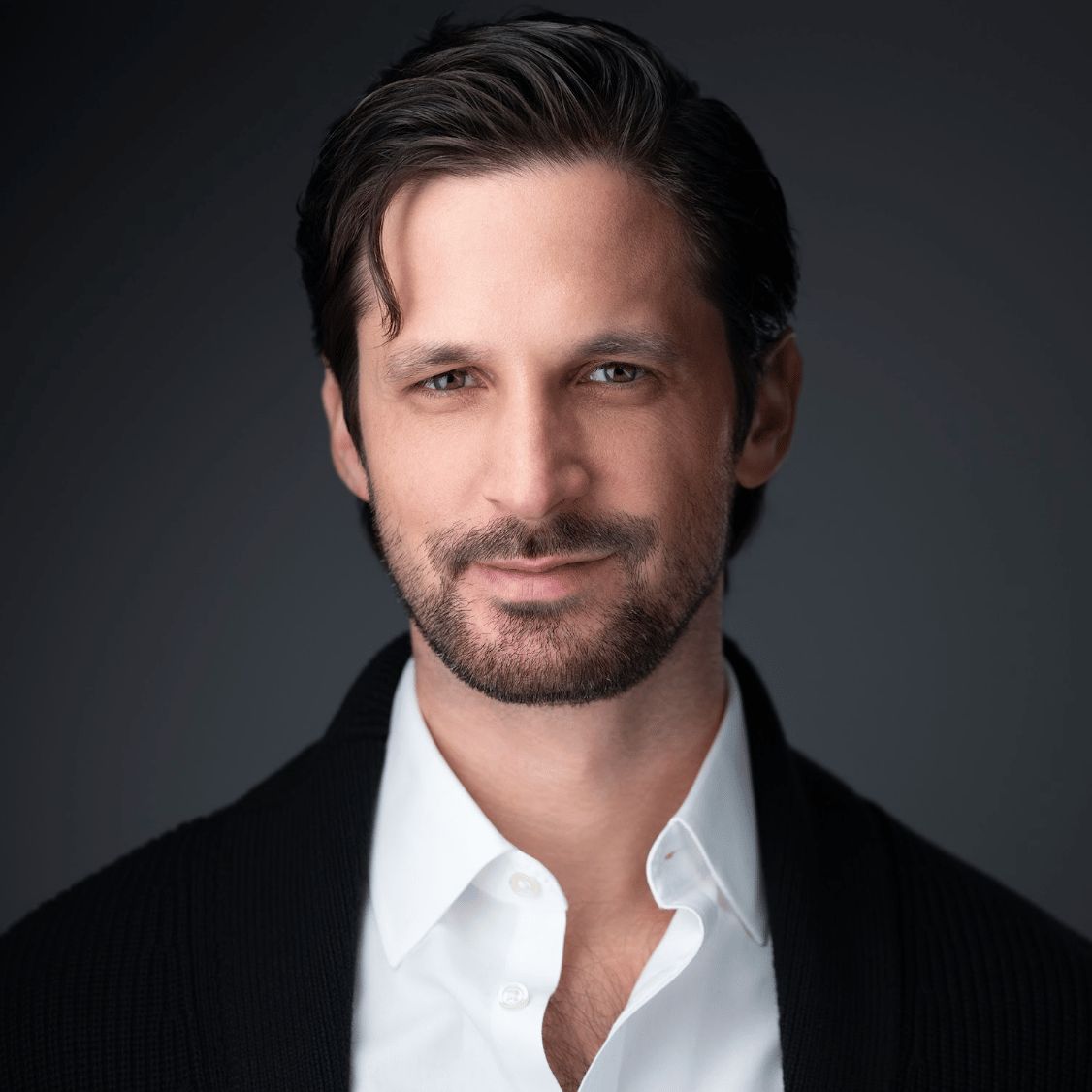
BEN MEER
Each week I ask a curious mind about their habits, routines, and rituals. This week we learn from Ben Meer, author of How to be Good at Life, which just debuted at #1 on the NYT Bestselling List this week!
1. One strategy to restart your creative engine? Mind mapping. Whenever I feel creatively stuck, I start with a blank page, write the central idea in the middle, and branch out with related thoughts and connections. Often, the most interesting insights come from connecting two things that initially seemed unrelated.
2. One mindset shift that transformed your work? You don’t need a two-hour morning routine to be successful. Your morning routine should serve your life, not become your life. Pick a few high-ROI activities (for me, it’s a big glass of water and 10 minutes of meditation). There’s often a straighter path to getting started on the things that bring you joy or move your life forward.
3. One anchor ritual to reconnect with yourself? My Mood Shift Playlist. I’ve collected songs I know can lift my mood, so whenever I’m feeling off, I just press play. A particularly useful place to start is the music you loved as a teenager, since our emotional connection to music from those years is unusually strong, often peaking around age 17 (researchers call this the “reminiscence bump”).
• You have 80,000 hours in your career. Most career advice relies on platitudes, not evidence. 80,000 Hours offers a practical, research-backed guide to what makes a fulfilling job, which skills matter in the age of AI, and how to find work that makes a difference. Get your free copy now.
• Better ideas often come from unexpected places. Uncommon Thread brings together 800+ hand-curated examples from marketing, psychology, sport, technology and beyond, helping you make useful connections across disciplines and find new ways into familiar problems. Feed your thinking differently.
• What if 21 days made your life unrecognizable? Just 21 days can help you begin the most extraordinary chapter of your life, one powerful habit at a time. Proven by real results. The 21-Day Self-Mastery Reset. 10–30 minutes daily. US$397. Wake up to a life you love.
Many thanks to our sponsors and cross-promo partners for supporting the Ness Labs newsletter! Want to appear here? Please email support@nesslabs.com to learn more.
If you enjoy the newsletter, you’ll love our community of curious minds conducting tiny experiments within a safe space and learning together. Here is an overview of upcoming events (full calendar):
• Join our next curiosity quest. Come explore one deep and meaningful question that will change your perspective on life and work. Our next session is on October 27 in the Ness Labs Fellowship.
**• Learn how to protect your attention.** In this session for all community members, Gosia Fricze will help you explore how constant distraction affects the priorities you care about and how to become more intentional about where your focus goes.
**• Explore the exhaustion of outgrowing.** In her research, Selena Tatum Isles Brochu keeps encountering a kind of resistance that doesn’t respond to standard interventions. Join her session to look beyond mindful productivity to where the nervous system meets the environment.
**• Figure out what works and what to be cautious about with AI.** Natalia runs the AI Collective within the Ness Labs community, with fortnightly virtual meetups that encourage collective curiosity and sensemaking around AI.
**• Design your day to strengthen your presence.** Join Matej Rumanovský for a workshop to begin shaping your own personal ritual for presence – something small, sustainable, and truly yours.
**• Create tiny experiments with AI.** In this workshop, William Collins will help you run experiments around the way you think, and work with AI as scaffolding to explore questions that matter to you.
**• Make progress on your projects.** Join Kathryn Ruge for our Monday body doubling sessions to work on personal or work-related projects that you want to make progress on, covering all timezones. Can’t make it? Adriana Scalora is also hosting coworking sessions on Tuesday.
**• Improve your knowledge management system.** Join our next PKM meeting where we learn from one another through sharing how our systems work in the real world and give new PKM users a leg up.
**• Host your own workshop.** Do you have an idea for a short presentation and Q&A or a workshop you’d like to trial? Test your first iteration in the Ness Labs community and get feedback. We promote all sessions here in the newsletter.
The Ness Labs Membership is $49/year for all peer-learning sessions and self-paced courses; the Ness Labs Fellowship is $249/year for live experimental coaching sessions and workshops taught by Anne-Laure. You can cancel any time.
You received this email because you subscribed to the Ness Labs newsletter. “-ness” is a suffix that means “state of being”, as in aware_ness_, mindful_ness_, conscious_ness_. Ness Labs is a playground for curiosity – a place where you can learn how to experiment with ideas, explore creative projects, and reflect on your progress. Of course I don’t want to see you go, but you can unsubscribe at any time. If you do leave, I’d love an email to let me know what I could do better to improve the newsletter. Alternatively, you can update your profile to use a different email address. © Ness Labs, 600 1st Ave, Ste 330 PMB 92768, Seattle, WA 98104-2246.

