The Art of Straying | Rebuilding Self-Trust | Interview with Jia Jang ͏ ͏ ͏ ͏ ͏ ͏ ͏ ͏ ͏ ͏ ͏ ͏ ͏ ͏ ͏ ͏ ͏ ͏ ͏ ͏ ͏ ͏ ͏ ͏ ͏ ͏ ͏ ͏ ͏ ͏ ͏ ͏ ͏ ͏ ͏ ͏ ͏ ͏ ͏ ͏ ͏ ͏ ͏ ͏ ͏ ͏ ͏ ͏ ͏ ͏ ͏ ͏ ͏ ͏ ͏ ͏ ͏ ͏ ͏ ͏ ͏ ͏ ͏ ͏ ͏
DuckDuckGo did not detect any trackers. More
The Art of Straying | Rebuilding Self-Trust | Interview with Jia Jang ͏ ͏ ͏ ͏ ͏ ͏ ͏ ͏ ͏ ͏ ͏ ͏ ͏ ͏ ͏ ͏ ͏ ͏ ͏ ͏ ͏ ͏ ͏ ͏ ͏ ͏ ͏ ͏ ͏ ͏ ͏ ͏ ͏ ͏ ͏ ͏ ͏ ͏ ͏ ͏ ͏ ͏ ͏ ͏ ͏ ͏ ͏ ͏ ͏ ͏ ͏ ͏ ͏ ͏ ͏ ͏ ͏ ͏ ͏ ͏ ͏ ͏ ͏ ͏ ͏ ͏ ͏ ͏ ͏ ͏ ͏ ͏ ͏ ͏ ͏ ͏ ͏ ͏ ͏ ͏ ͏ ͏ ͏ ͏ ͏ ͏ ͏ ͏ ͏ ͏ ͏ ͏ ͏ ͏ ͏ ͏ ͏ ͏ ͏ ͏ ͏ ͏ ͏ ͏ ͏ ͏ ͏ ͏ ͏ ͏ ͏ ͏ ͏ ͏ ͏ ͏ ͏ ͏ ͏ ͏ ͏ ͏ ͏ ͏ ͏ ͏ ͏ ͏ ͏ ͏ ͏ ͏ ͏ ͏ ͏ ͏ ͏ ͏ ͏ ͏ ͏ ͏ ͏ ͏ ͏ ͏ ͏ ͏ ͏ ͏
July 15th, 2026
_A newsletter by_ Anne-Laure Le Cunff

Hi friends,
This month has been quite intense on my end, with lots of travel, conference presentations, and research projects. Everyone seems to know that not much happens in August (especially here in Europe), so July has been a bit of a scramble.
The busier I get, the more I notice my instinct to avoid anything that might create extra uncertainty. I want things to work the first time.
But I’ve been thinking about how much this perfectionist mindset limits our opportunities for growth and learning. So this week’s newsletter is about a different way to relate to error.
Enjoy the read, and stay curious!
Anne-Laure
P.S. Our next metacognitive session led by Gosia will be about self-trust and how to rebuild it from a mental and emotional perspective. Members can rsvp here, non-members can join the community here.
One of the questions I get asked most often is: how do I accept failure? We all understand, in theory, that failure is how we learn. But most of us are deeply programmed to avoid it, especially failing in public.
Last week, I was at a talk by Richard Dawkins. At one point, he mentioned how the word meme is now used in a much broader sense than he ever intended when he coined it. It made me think of another word whose meaning has drifted over time: error.
Today, we use error as a synonym for mistake: something to be ashamed of, something to fix and forget. But for scientists, an error is simply the gap between prediction and outcome. It carries no moral weight. It’s just information.
The etymology of the word actually traces it back to the Latin noun meaning “a wandering about” or “a straying,” from the verb errare – to roam or drift. So an error really is just a detour. And every detour is an opportunity to explore new territory.
Once you understand this, your relationship with failure starts to shift. You stop asking “how do I avoid errors?” and start asking “what is this error telling me?” The gap between what you expected and what actually happened becomes the most interesting part of any project – the place where learning lives.
Here’s how you can make friends with error:
Formulate a hypothesis before trying something new. This is how you create healthy room for error. When you make a prediction, you create the possibility of a gap between expectation and outcome, and it’s by examining that gap that you learn. No prediction means no gap means no lesson.
Ask yourself what margin for error you actually have. Some projects have small margins; others have generous ones. Sending a rocket to space is not the same as launching a newsletter. Knowing your margin should inform how boldly you experiment, and you’ll often find the margin is bigger than you assumed.
Create opportunities for error. Deliberately put yourself in situations where you don’t know what the outcome will be, where you can make an informed prediction but can’t be sure. This turns uncertainty from a threat into a playground, and gives you a more playful way to relate to the unknown.
A great way to do all three is to run tiny experiments: small, low-stakes trials with a clear hypothesis and a set duration. Try posting once a day for two weeks and see what happens. Test a new morning routine for ten days. The stakes are low, and the errors become data instead of disappointments.
Lastly, consider sharing this reframe with the people around you, whether that’s your children, your friends, or your colleagues. Most of us were trained to treat errors as things to hide. Imagine how differently we’d all work and learn if we treated them as things to examine together.
We have no idea what the future holds. That’s precisely why making friends with error matters: it frees you to make bolder predictions, take more interesting detours, and learn faster than the people still trying never to be wrong.
Ready to put these ideas into practice? Try this week’s tiny experiment to practice making friends with error:
I will [formulate a hypothesis before trying something new] for [2 weeks].
This will help you create a gap between prediction and outcome that you can then learn from. Want to dig deeper? Get your copy of Tiny Experiments.
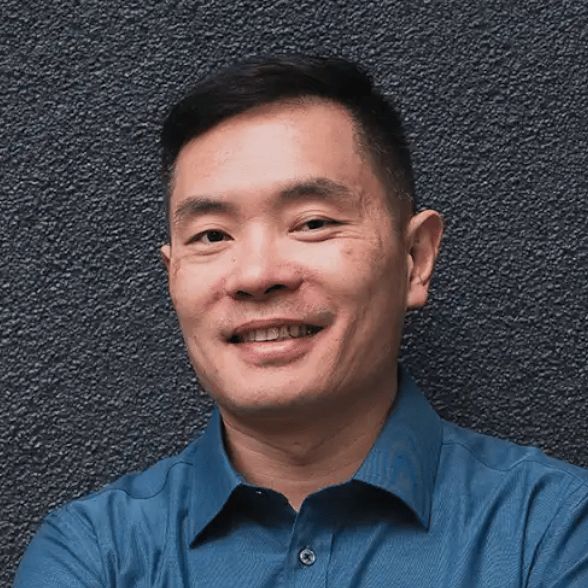
JIA JANG
Each week I ask a curious mind about their habits, routines, and rituals. This week we learn from award-winning speaker, author, and entrepreneur Jia Jiang whose TED talk about rejection therapy has millions of views. His new book, Easy Discipline, is out this week.
1. One daily practice you can’t do without? My biggest enemy to a productive day is distraction. To build a workspace without the gadget culprits, I drive to my secret writing spot with no phone and no wifi, just me, my internet-less computer, and my ideas. It’s environment-shaped deep work.
2. One anchor ritual to reconnect with yourself? I re-read books that inspired me. Founding Brothers by Joseph Ellis reconnects me with America as an idea, The War of Art by Steven Pressfield feels like a battle hymn before a writing project, and On Writing by Stephen King reminds me what great writing looks like.
3. One mindset shift that transformed your work? I was raised in the Chinese philosophy of Chi Ku (吃苦), “eating bitterness” to achieve your goals. For a long time, I believed suffering was the price of success. Then, through failure and experiment, I learned the opposite: enjoyment and pleasure are the key to sustainable achievement. Nowadays I do whatever it takes to have fun at work. Good work usually follows.
• Discover the Flemish secret to doing what you love. Jo Franco, a multilingual filmmaker and former Netflix/National Geographic travel host, just released the Antwerp episode of her independent docuseries Translated. Each episode follows one untranslatable word in the place it comes from. This one explores the Flemish word goesting through food, diamonds, migration stories, chocolate, sailing, and the quiet magic of Antwerp. Watch it here.
• Are you ready to break free from inbox overwhelm? Start using Meco, a newsletter aggregator designed to make reading feel calm, focused, and useful again. Bring all your favorite newsletters into one place, organize them with smart filters, and wake up to a personalized news briefing that surfaces the most relevant content at the right time. Take control of your inbox.
• Connect more deeply with your fans and build a lasting community around your work. Earn a living online with Kit, the newsletter platform built for creators, by creators. Grow your audience, share what matters, sell digital products, and turn your ideas into a sustainable business, all from one simple platform. Get started today.
Many thanks to our sponsors and cross-promo partners for supporting the Ness Labs newsletter! Want to appear here? Please email support@nesslabs.com to learn more.
If you enjoy the newsletter, you’ll love our community of curious minds conducting tiny experiments within a safe space and learning together. Here is an overview of upcoming events (full calendar):
• Rebuild self-trust. In this guided metacognitive session, Gosia Fricze will help you explore how self-trust gets weakened over time, and how to strengthen confidence in your own decisions from a mental and emotional perspective.
**• Protect your mental health at work.** In this one-hour session, Adina Dinu will teach you the work factors that undermine your well-being, the differences between stress, burnout, and trauma, and healthy ways to respond to stress and adversity at work.
**• Make progress on your projects.** Join Kathryn Ruge for our Monday ‘body doubling’ coworking session to work on personal or work-related projects that you want to make progress on, covering all timezones. Ethan Miller is also hosting a cowriting session on Sunday this week.
**• Improve your knowledge management system.** Join our next PKM meeting where we learn from one another through sharing how our systems work in the real world and give new PKM users a leg up.
**• Host your own workshop.** Do you have an idea for a short presentation and Q&A or a workshop you’d like to trial? Test your first iteration in the Ness Labs community and get feedback. We promote all sessions here in the newsletter.
All of these and future events are included in the price of the membership (only $49 for one year), as well as access to our courses, workshop library, and a dedicated space to track your tiny experiments.
Until next week, take care!
Anne-Laure.
You received this email because you subscribed to the Ness Labs newsletter. “-ness” is a suffix that means “state of being”, as in aware_ness_, mindful_ness_, conscious_ness_. Ness Labs is a playground for curiosity – a place where you can learn how to experiment with ideas, explore creative projects, and reflect on your progress. Of course I don’t want to see you go, but you can unsubscribe at any time. If you do leave, I’d love an email to let me know what I could do better to improve the newsletter. Alternatively, you can update your profile to use a different email address. © Ness Labs, 600 1st Ave, Ste 330 PMB 92768, Seattle, WA 98104-2246.

