Live on BBC News | When Notes Get in the Way | Business Book Awards | Interview with Roy Schwartz ͏ ͏ ͏ ͏ ͏ ͏ ͏ ͏ ͏ ͏ ͏ ͏ ͏ ͏ ͏ ͏ ͏ ͏ ͏ ͏ ͏ ͏ ͏ ͏ ͏ ͏ ͏ ͏ ͏ ͏ ͏ ͏ ͏ ͏ ͏ ͏ ͏ ͏ ͏ ͏ ͏ ͏ ͏ ͏ ͏ ͏ ͏ ͏ ͏ ͏ ͏ ͏ ͏ ͏ ͏ ͏ ͏ ͏ ͏ ͏ ͏ ͏ ͏ ͏ ͏ ͏ ͏ ͏ ͏ ͏ ͏ ͏ ͏ ͏ ͏ ͏ ͏ ͏ ͏ ͏ ͏ ͏ ͏ ͏ ͏ ͏ ͏ ͏ ͏ ͏ ͏ ͏ ͏ ͏ ͏ ͏ ͏ ͏ ͏ ͏ ͏ ͏ ͏ ͏ ͏ ͏ ͏ ͏ ͏ ͏ ͏ ͏ ͏ ͏ ͏ ͏ ͏ ͏ ͏ ͏ ͏ ͏ ͏ ͏ ͏ ͏ ͏ ͏ ͏ ͏ ͏ ͏ ͏ ͏ ͏ ͏ ͏ ͏ ͏ ͏ ͏ ͏ ͏ ͏ ͏ ͏ ͏ ͏ ͏ ͏
September 17th, 2026
_A newsletter by_ Anne-Laure Le Cunff
Hi friends,
Appearing on the BBC walking barefoot on stage to receive an award was not on my bingo card, but that’s exactly what happened this week!
Last night, Tiny Experiments was the overall winner at the Business Book Awards, a prestigious competition with hundreds of entries each year.
We’re living through a period of enormous change, so it feels special to see a book about experimentation receive this recognition. But the experience also taught me something about preparation and trust, which I’d like to share with you in this edition.
During the awards ceremony, we’d been told there would be no speeches. We were simply supposed to walk on stage, receive the award, smile for the camera and return to our seats. They didn’t mention there was one exception: the overall winner.
So when I was about to walk off stage after smiling for the camera and someone handed me a microphone, I froze for a moment. I spend a lot of time talking about experimentation and self-discovery, but what are you supposed to say when you receive an award?
I started with the obvious answer: saying thank you. I thanked my publisher and my editor, and then I thanked all the authors in the room for continuing to write books at a time when so many of incentives seem to encourage us to make things shorter, faster and easier to consume.
When I returned to my seat, the event publicist came over and told me that they had arranged an interview with the BBC for the following morning to talk about the book. At 5:30am.
Given the hour, I didn’t trust my half-awake brain to produce coherent sentences on live television and decided it’d be sensible to prep a bit, so I wrote down a few answers to questions I thought they might ask.
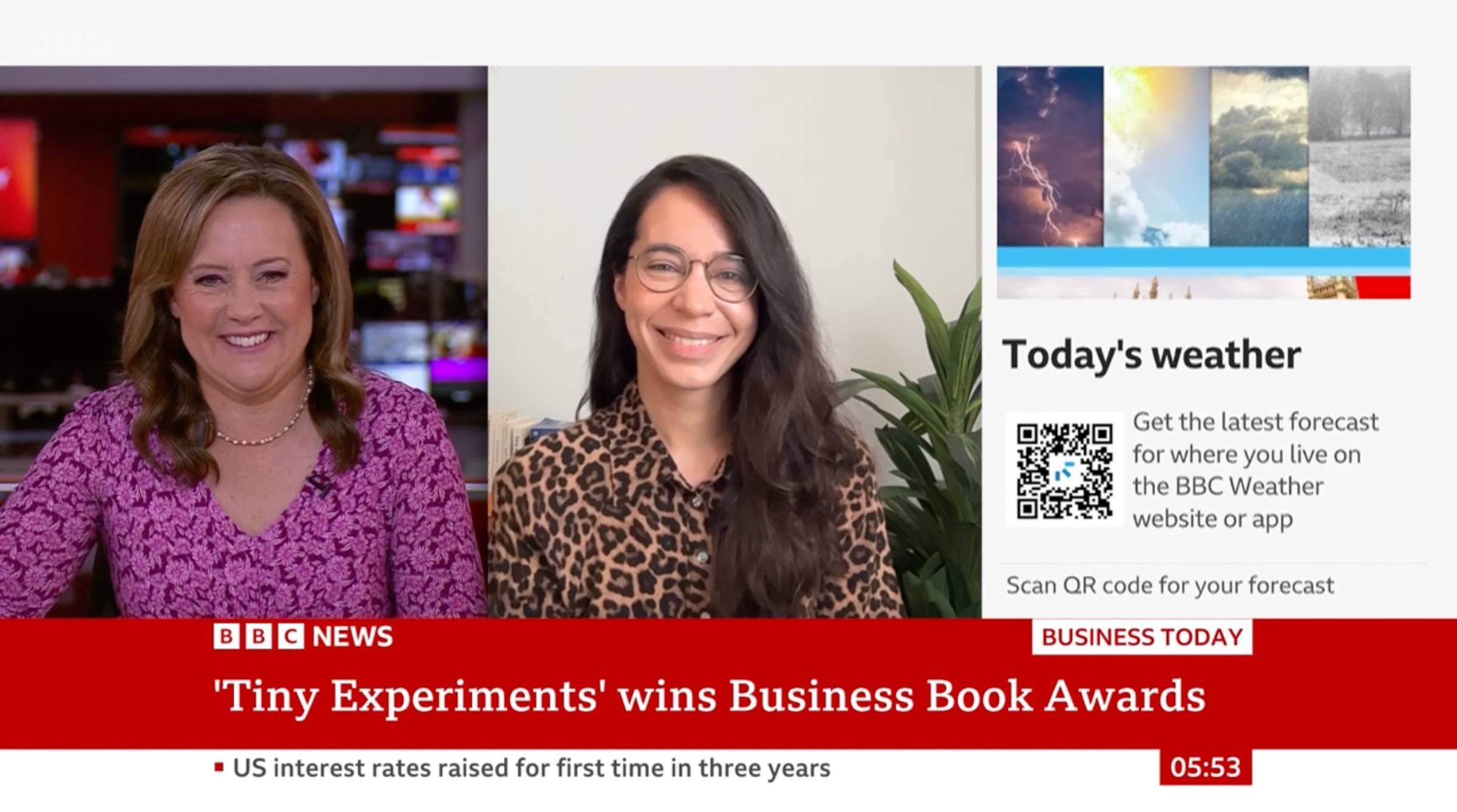
The interesting thing is that the preparation seemed to make me worse (see the interview on LinkedIn or Instagram).
During the first question, I kept glancing down at my notes, trying to remember the answer I had already decided to give. Watching it back, I can see that I look more stiff and self-conscious than usual.
Then, for the second question, I stopped looking at the notes. I looked at the camera, listened to the question and answered it. Immediately, I looked and sounded much more like myself.
There are some studies that may help explain what happened here. Research on self-focused attention in public speaking suggests that when we become overly conscious of our own performance, part of our attention gets redirected away from the conversation itself and towards monitoring how we’re performing.
Instead of just thinking about the question in front of us, we start running a second cognitive process in parallel: How do I sound? What am I supposed to say next? Am I saying this correctly?
So while my notes were supposed to reduce the risk of freezing, they also created an additional task. I was no longer just answering the question; I was also trying to remember what I had planned to say and checking whether I was saying it correctly.
Once I stopped doing that, the task became much simpler: listen to the question, and answer with what comes naturally to mind.
This doesn't mean preparation is useless, but the aim shouldn’t be to prepare the exact sentences that will come out of your mouth. Instead, what you want is to understand the ideas so well that you can trust yourself to find the words when you need them.
If this is also something you’ve struggled with in the past, here are a few ways you can share your expertise without falling prey to self-focused attention and explicit monitoring:
The idea is to turn all the work you’ve done into self-trust. You’ve done the reading, the thinking, the practicing beforehand so that, so when the moment arrives you don’t have to control every word that comes out of your mouth.
Instead, you can wonder: Where is this conversation going to take us? What might I discover as I answer? Less control, more curiosity.
On my end, I hope the award helps many more people discover how an experimental mindset can help us navigate uncertainty. And perhaps another lesson here for me is to stop experimenting with new shoes at important events :)
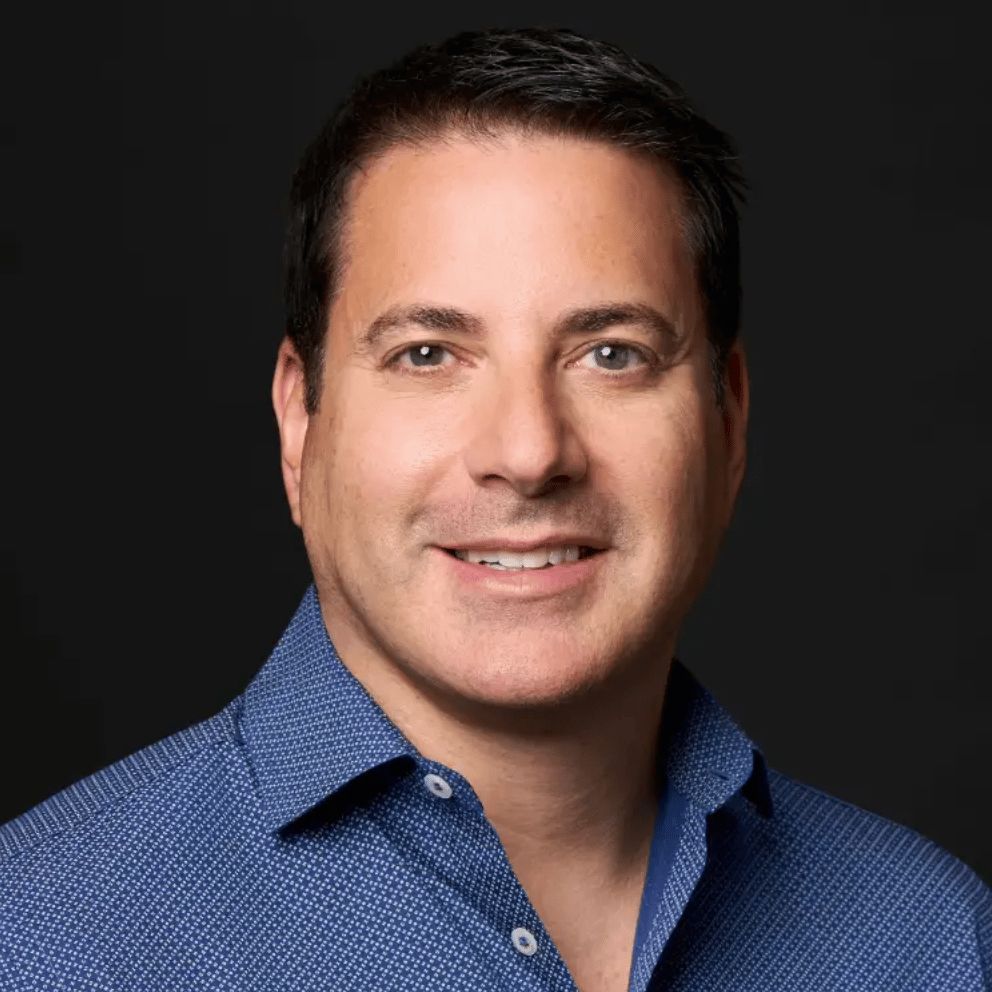
ROY SCHWARTZ
Each week I ask a curious mind about their habits, routines, and rituals. This week we learn from Roy Schwartz, co-founder of Axios, whose book Simplify (co-authored with Jim VandeHei and Mike Allen) explores how to spend most of your time doing things that make you feel and perform better.
1. One daily practice you can’t do without? I start my day with coffee and Mike's Axios AM newsletter every morning.
2. One idea that keeps you up at night? AI is keeping me up at night. When the people who build it can’t stop talking about how dangerous it can be that’s worth paying attention to.
3. One habit you wish you had? Working out daily, I don't always get to fit it into my schedule.
• The Art of Unclenching. Jonny Miller recently wrote an essay on How to Unclench, and it clearly resonated with many people (over 1m views in a few days!). He’s running a workshop this Thursday 17th to share practical tools on how to apply it yourself. Save your spot.
• You have 80,000 hours in your career. Most career advice relies on platitudes, not evidence. 80,000 Hours offers a practical, research-backed guide to what makes a fulfilling job, which skills matter in the age of AI, and how to find work that makes a difference. Get your free copy now.
• Stressed at work, fed up with your job and dreading Mondays in the office? “Anti-career coach” and London banker Tom Grundy has created a free guide (How To Work Your Way) for professionals wanting more freedom and fulfilment. Join his newsletter to grab the guide.
Many thanks to our sponsors and cross-promo partners for supporting the Ness Labs newsletter! Want to appear here? Please email support@nesslabs.com to learn more.
If you enjoy the newsletter, you’ll love our community of curious minds conducting tiny experiments within a safe space and learning together. Here is an overview of upcoming events (full calendar):
• Use AI to actually improve your life and work. Lia Golledge is an AI Growth Marketer and author of 34 books. In this session, she’ll share the AI experiments that have genuinely transformed how she learns, thinks, creates, writes, makes decisions, and grows her business.
• Make yourself legible. In this practical workshop, Chris Read will share a collection of simple sensemaking tools developed through years of trying to better understand his own thoughts, emotions and reactions.
• Design your self-leadership framework. Join William Collins for a conversation where you will learn how to understand your mind frames, how they impact your relationship with the future, and how to reframe them.
**• Make progress on your projects.** Join Kathryn Ruge for our Monday and Tuesday ‘body doubling’ coworking sessions to work on personal or work-related projects that you want to make progress on, covering all timezones. Ethan Miller is also hosting a cowriting session on Sunday this week.
**• Improve your knowledge management system.** Join our next PKM meeting where we learn from one another through sharing how our systems work in the real world and give new PKM users a leg up.
**• Host your own workshop.** Do you have an idea for a short presentation and Q&A or a workshop you’d like to trial? Test your first iteration in the Ness Labs community and get feedback. We promote all sessions here in the newsletter.
All of these and future events are included in the price of the membership (only $49 for one year), as well as access to our courses, workshop library, and a dedicated space to track your tiny experiments.
You received this email because you subscribed to the Ness Labs newsletter. “-ness” is a suffix that means “state of being”, as in aware_ness_, mindful_ness_, conscious_ness_. Ness Labs is a playground for curiosity – a place where you can learn how to experiment with ideas, explore creative projects, and reflect on your progress. Of course I don’t want to see you go, but you can unsubscribe at any time. If you do leave, I’d love an email to let me know what I could do better to improve the newsletter. Alternatively, you can update your profile to use a different email address. © Ness Labs, 600 1st Ave, Ste 330 PMB 92768, Seattle, WA 98104-2246.

