Why we make decisions out of fear | Curiosity-driven decision-making | Interview with Dr Christian Poensgen ͏ ͏ ͏ ͏ ͏ ͏ ͏ ͏ ͏ ͏ ͏ ͏ ͏ ͏ ͏ ͏ ͏ ͏ ͏ ͏ ͏ ͏ ͏ ͏ ͏ ͏ ͏ ͏ ͏ ͏ ͏ ͏ ͏ ͏ ͏ ͏ ͏ ͏ ͏ ͏ ͏ ͏ ͏ ͏ ͏ ͏ ͏ ͏ ͏ ͏ ͏ ͏ ͏ ͏ ͏ ͏ ͏ ͏ ͏ ͏ ͏ ͏ ͏ ͏ ͏ ͏ ͏ ͏ ͏ ͏ ͏ ͏ ͏ ͏ ͏ ͏ ͏ ͏ ͏ ͏ ͏ ͏ ͏ ͏ ͏ ͏ ͏ ͏ ͏ ͏ ͏ ͏ ͏ ͏ ͏ ͏ ͏ ͏ ͏ ͏ ͏ ͏ ͏ ͏ ͏ ͏ ͏ ͏ ͏ ͏ ͏ ͏ ͏ ͏ ͏ ͏ ͏ ͏ ͏ ͏ ͏ ͏ ͏ ͏ ͏ ͏ ͏ ͏ ͏ ͏ ͏ ͏ ͏ ͏ ͏ ͏ ͏ ͏ ͏ ͏ ͏ ͏ ͏ ͏ ͏ ͏ ͏ ͏ ͏ ͏
October 22nd, 2026
_A newsletter by_ Anne-Laure Le Cunff

Hi friends,
I just came back from Paris where I had many opportunities to meet with my fears, whether it was getting home during the riots, or giving a keynote at the Paris Convention Center.
This week, I want to explore with you the science of why we tend to listen to our fears when making decisions, and how to instead listen to our curiosity.
I’m also delighted to share an interview with Dr Christian Poensgen, whose new book Ultraproductive was just named one of the Financial Times’ books of the month.
Lastly, we have some amazing sessions coming up in the community, exploring topics such as presence, exhaustion, and how to navigate the ethics of creativity and productivity if you use AI in your work.
Enjoy the read!
— Anne-Laure
You’re in a meeting and have something to say; perhaps you disagree with a proposal or have an idea worth exploring. But just as you’re about to speak, you hesitate. What if your colleagues think it’s a bad idea? What if you sound foolish? What if someone challenges you? Rather than risk being judged or rejected, you decide to keep your thoughts to yourself.
Almost immediately, you feel a sense of relief. By staying silent, you’ve avoided an uncomfortable situation. And because avoiding the situation reduced your anxiety, your brain learns to associate silence with safety. Over time, staying silent can become your default response whenever you feel uncertain.
But why does this happen in the first place? You’re sitting in a meeting room, surrounded by colleagues, with no immediate physical danger. So why does your brain respond as though you need protecting
The answer lies partly in our evolutionary history. Our brains evolved to prioritize avoiding danger because the consequences of failing to recognize a threat were often far greater than the consequences of missing an opportunity.
For our ancestors, being overly cautious might have meant losing out on something desirable, while being insufficiently cautious could have meant losing their lives. Over generations, natural selection favored protective systems that were sensitive to potential threats, even at the expense of occasional false alarms.
Psychiatrist and evolutionary biologist Randolph Nesse explained this through what he called the smoke detector principle. Just as a smoke alarm is designed to go off at the slightest indication of smoke, even when there’s no fire, our defensive systems are designed to respond to possible threats before we can be certain they’re real.
But how does this explain our modern fears in the absence of actual threat to our lives, like in a meeting?
Those happen because fear is more than an emotional response to danger. It’s part of a neurobiological system that motivates protective behavior. Crucially, these systems respond to perceived threats, including situations that pose no immediate physical danger.
And that’s why the possibility of rejection, embarrassment, criticism or failure can be enough to trigger a protective response.
Staying silent, turning down an opportunity or avoiding a difficult conversation can feel reassuring in the moment, even when these choices prevent us from growing. But we can learn to respond to uncertainty with greater curiosity instead of automatically choosing short-term relief.
Fear will always play a role in our decisions, and for good reason. Sometimes it alerts us to genuine risks worth considering. But other times, it reflects a protective response that can get in the way of experimentation and discovery.
The next time you find yourself holding back, pay attention to what your fear is telling you. Consider the risks of taking action, but also the opportunities you might miss by avoiding it. Curiosity can help you explore those possibilities and make choices informed by experience.
Try this week’s tiny experiment to make practice replacing fear-based decisions with curiosity-based decisions:
I will [intentionally question my fears] for [the next two weeks]__.
You can do this by pausing in the moment, through journaling, your weekly review or any other metacognitive practice. You might even design tiny experiments to explore specific fears.
➤ Want to learn how to develop and maintain an experimental mindset? Get your copy of Tiny Experiments.
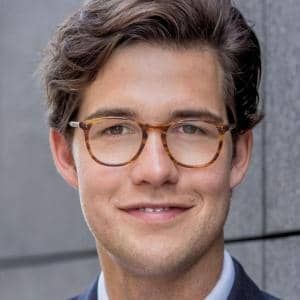
DR CHRISTIAN POENSGEN
Each week I ask a curious mind about their habits, routines, and rituals. This week we learn from Dr Christian Poensgen, co-author of Ultraproductive with Eric Partaker, a book exploring their 90-minute method for more focus and less stress.
1. One daily practice you can’t do without? I protect an hour every day for deep work before I open my inbox or join my first call – to write, create content, learn something new, prepare for a high-stakes meeting, or tackle whatever I’ve been putting off.
2. One strategy to restart your creative engine? When I need new ideas, I go for a walk, which Stanford researchers found boosts creative output by 60% compared to sitting. When I’m low on energy in the afternoon, I take a power nap.
3. One mindset shift that transformed your work? Nothing meaningful in life comes without stress, and nothing that comes without stress is particularly meaningful. So I stopped trying to avoid stress, learned to embrace it in the moment, and got very deliberate about recovering afterwards so it doesn’t turn chronic.
• Explore tiny experiments for flow states. Join us on Mon, Nov. 2 at 12pm ET for a free masterclass hosted with Dr Jon Beale about how tiny experiments can help us experience more flow, followed by an open Q&A. Everyone is welcome, and you can also join the Tiny Experiments for Flow States challenge afterwards. Join for free.
• Join the Annual Review Virtual Summit. On Wed, Nov. 4, I’m speaking at a free online event hosted by Tiago Forte to celebrate his new book, Life in Perspective. 10 speakers share how they look back on their year and plan the next one, in short, practical talks from 12–4 pm ET. Save your seat.
• What keeps bringing you back to the same question? BASAEV’s AI-guided self-reflection tool asks nine adaptive questions and creates a Self Discovery Report exploring patterns in your responses. Bring a question you keep returning to and use the report as a starting point for reflection. Explore your patterns for free.
Many thanks to our sponsors and cross-promo partners for supporting the Ness Labs newsletter! Want to appear here? Please email support@nesslabs.com to learn more.
If you enjoy the newsletter, you’ll love our community of curious minds conducting tiny experiments within a safe space and learning together. Here is an overview of upcoming events (full calendar):
• Join our next curiosity quest. Come explore one non-obvious question that is guaranteed to change your perspective on life and work. Our next session is on October 27, hosted as part of the Ness Labs Fellowship.
**• Develop your inner compass.** In this Ness Labs Membership session open to all community members, Gosia Fricze will help you explore what guides your decisions and how to develop a compass rooted in your values, needs, and aspirations.
**• Create tiny experiments with AI.** In this workshop, William Collins will help you run experiments around the way you think, and work with AI as scaffolding to explore questions that matter to you.
**• Explore the exhaustion of growth.** In her research, Selena Tatum Isles Brochu keeps encountering a kind of resistance that doesn’t respond to standard interventions. Join her session to look beyond mindful productivity to where the nervous system meets the environment.
**• Craft your day to strengthen presence.** Join Matej Rumanovský for a workshop to begin shaping your own personal ritual for presence – something small, sustainable, and truly yours.
**• Make progress on your projects.** Join Kathryn Ruge for our Monday body doubling sessions to work on personal or work-related projects that you want to make progress on, covering all timezones. Can’t make it? Adriana Scalora is also hosting coworking sessions on Tuesday.
**• Design a healthy relationship with AI.** Natalia runs the AI Collective within the Ness Labs community, with fortnightly virtual meetups that encourage collective curiosity and sensemaking around AI.
**• Improve your knowledge management system.** Join our next PKM meeting where we learn from one another through sharing how our systems work in the real world and give new PKM users a leg up.
**• Host your own workshop.** Do you have an idea for a short presentation and Q&A or a workshop you’d like to trial? Test your first iteration in the Ness Labs community and get feedback. We promote all sessions here in the newsletter.
The Ness Labs Membership is $49/year for all peer-learning sessions and self-paced courses; the Ness Labs Fellowship is $249/year for live experimental coaching sessions and workshops taught by Anne-Laure. You can cancel any time.
You received this email because you subscribed to the Ness Labs newsletter. “-ness” is a suffix that means “state of being”, as in aware_ness_, mindful_ness_, conscious_ness_. Ness Labs is a playground for curiosity – a place where you can learn how to experiment with ideas, explore creative projects, and reflect on your progress. Of course I don’t want to see you go, but you can unsubscribe at any time. If you do leave, I’d love an email to let me know what I could do better to improve the newsletter. Alternatively, you can update your profile to use a different email address. © Ness Labs, 600 1st Ave, Ste 330 PMB 92768, Seattle, WA 98104-2246.

