Why Groups Make Bad Decisions | Voicing Your Doubts in Meetings | Interview with Vanessa Van Edwards ͏ ͏ ͏ ͏ ͏ ͏ ͏ ͏ ͏ ͏ ͏ ͏ ͏ ͏ ͏ ͏ ͏ ͏ ͏ ͏ ͏ ͏ ͏ ͏ ͏ ͏ ͏ ͏ ͏ ͏ ͏ ͏ ͏ ͏ ͏ ͏ ͏ ͏ ͏ ͏ ͏ ͏ ͏ ͏ ͏ ͏ ͏ ͏ ͏ ͏ ͏ ͏ ͏ ͏ ͏ ͏ ͏ ͏ ͏ ͏ ͏ ͏ ͏ ͏ ͏ ͏ ͏ ͏ ͏ ͏ ͏ ͏ ͏ ͏ ͏ ͏ ͏ ͏ ͏ ͏ ͏ ͏ ͏ ͏ ͏ ͏ ͏ ͏ ͏ ͏ ͏ ͏ ͏ ͏ ͏ ͏ ͏ ͏ ͏ ͏ ͏ ͏ ͏ ͏ ͏ ͏ ͏ ͏ ͏ ͏ ͏ ͏ ͏ ͏ ͏ ͏ ͏ ͏ ͏ ͏ ͏ ͏ ͏ ͏ ͏ ͏ ͏ ͏ ͏ ͏ ͏ ͏ ͏ ͏ ͏ ͏ ͏ ͏ ͏ ͏ ͏ ͏ ͏ ͏ ͏ ͏ ͏ ͏ ͏ ͏
October 8th, 2026
_A newsletter by_ Anne-Laure Le Cunff
Hi friends,
I’m in the US this week for one of my two annual “learning trips” – a chance to catch up with my publisher, attend a mastermind, and meet with fellow authors to explore better ways of approaching my work and new experiments I could run.
I was also fortunate to be booked to speak at two conferences while I’m here, so it’s been a very full and productive trip. My mind is buzzing, and it’s been completely worth the jet lag!
One of my favorite things about being in rooms full of curious people is how a good question can send you down a whole new line of inquiry. This week’s newsletter was inspired by one of those questions about the potential benefits of consensus.
I hope you enjoy the read, and most importantly... stay curious!
— Anne-Laure
P.S. Massive congrats to my friends Ben Meer (How to Be Good at Life) and Vanessa Van Edwards (Conversation) on their new books! I interviewed Vanessa in this edition, and Ben in the next.
I was speaking at a conference yesterday when someone asked me about consensus. If a team is making an important decision, they asked, surely getting everyone to agree is a good thing?
It can be, with some big caveats. The problem is we often confuse two different jobs a group has to do: figuring out what is true, and deciding what to do about it. Consensus is useful for the latte, but is surprisingly unreliable for the first part of that process.
We’re a deeply social species, and much of what we know comes from other people. We don’t independently verify whether every food is safe or whether every social convention makes sense. We learn by watching the people around us.
Models of cultural evolution suggest that this tendency can be adaptive. When individual learning is costly, what researchers call “conformist transmission” (adopting the behavior of the majority) makes sense as it points us toward behaviors that have already proved successful.
There’s also a coordination benefit. If ten people are trying to cross a river, it matters less whether they have identified the theoretically optimal crossing point, than whether they agree to cross in the same place.
But this mechanism that’s useful for basic social learning and coordination can become dangerous when we use it to answer more complex questions, because the desire to agree can narrow the search too early.
Research comparing decision-making methods found that groups using devil’s advocacy or dialectical inquiry made better decisions than groups told to seek consensus.
And in one study, groups encouraged to challenge one another actually ended up with greater consensus and acceptance of the final decision than groups pushed toward agreement from the start. The problem isn’t seeking consensus itself, it’s seeking consensus too early.
So what should you do if you’re faced with a complex question, or navigating a project with lots of uncertainties? Instead of seeking consensus, aim to foster collective curiosity.
Instead of asking, “Can we agree on this?”, the group asks, “What don’t we know yet?” Switching from consensus to curiosity changes our relationship with uncertainty, especially when it’s paired with experimentation.
If two people suggest competing solutions, you don’t need another hour of debate. Ask what evidence would help decide between them, then design a tiny experiment to gather that evidence. Show an unfinished prototype to five customers. Try a new process with three teams. Change one part of the onboarding experience for one week.
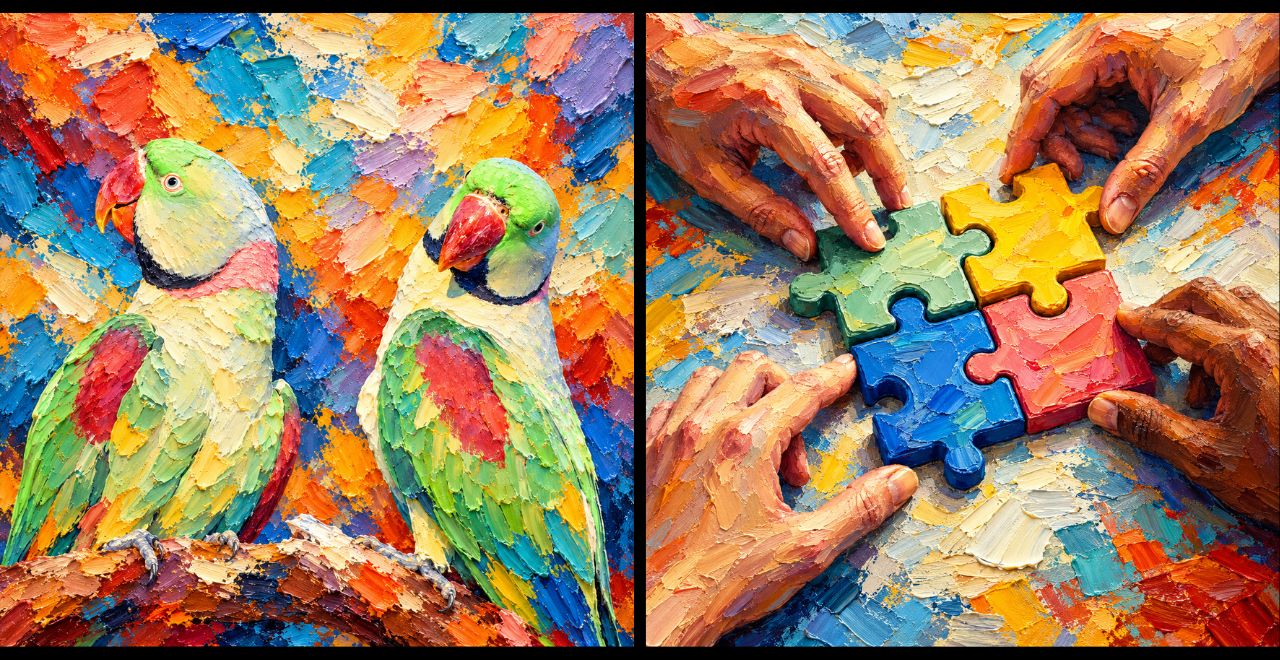
This is the distinction I find useful:
All three are important, but we shouldn’t use them in the wrong order, and consensus should never be a substitute for the messy process of experimenting to figure out our next steps.
Try this week’s tiny experiment to make more room for collective curiosity when navigating complex decisions with your team:
I will [openly voice my doubts in meetings] for [two weeks]__.
This can encourage others to share their doubts as well, and to explore together what evidence might help clarify your options. Want to learn how to develop an experimental mindset? Get your copy of Tiny Experiments.
VANESSA VAN EDWARDS
Each week I ask a curious mind about their habits, routines, and rituals. This week we learn from Vanessa Van Edwards, author of Cues, Captivate, and now Conversation, a guide to making every interaction count (out this week!).
1. One daily practice you can’t do without? Taking a long walk without my phone. Some of my best ideas, breakthroughs, and solutions happen when I give my brain space to wander.
2. One idea that keeps you up at night? Every conversation is now competing with a social feed. At any moment someone could pull away to check their social media. I think human connection is one of the most important skills of our time but it can’t compete with an algorithm unless we fight it.
3. One mindset shift that transformed your work? Stop trying to impress people and start trying to help people. The moment I focused on being purposeful instead of being perfect, everything changed.
• Ideas are only useful if you remember them. Reading is the beginning. Applying what you learn is what matters. Shortform goes beyond traditional book summaries with expert guides, practical exercises, and insights designed to help ideas stick. Start free.
• Break free from inbox overwhelm. Start using a newsletter aggregator built for reading and wake up to a personalized news briefing using smart filters to always surface the most relevant content at the right time. Try Meco.
• Community is more needed than ever in the age of AI. Bring together engaging discussions, live streams, chat, events, and memberships with Circle, the all-in-one community platform for creators and brands. Join today.
Many thanks to our sponsors and cross-promo partners for supporting the Ness Labs newsletter! Want to appear here? Please email support@nesslabs.com to learn more.
If you enjoy the newsletter, you’ll love our community of curious minds conducting tiny experiments within a safe space and learning together. Here is an overview of upcoming events (full calendar):
• Join our next experimental coaching session. Come with your areas of uncertainty, leave with a new tool you can start experiment with straight away. Our next session is on October 13 in the Ness Labs Fellowship.
**• Learn to follow your energy.** In this session for all community members, Gosia Fricze will help you explore how your energy changes throughout the day and how to make choices that better reflect your natural rhythms.
**• Shed new light on conflict.** Join Tammy Lenski for a workshop where you’ll discuss how stuck stories shape the way we see a conflict and respond to it, and how to avoid some conflict entirely.
**• Build a strong mind.** In this virtual meetup, William Collins will help you run experiments around the way you think, and work with AI as it relates to a question that matters to you.
**• Make progress on your projects.** Join Kathryn Ruge for our Monday and Tuesday ‘body doubling’ coworking sessions to work on personal or work-related projects that you want to make progress on, covering all timezones. Ethan Miller is also hosting a cowriting session on Sunday this week.
**• Improve your knowledge management system.** Join our next PKM meeting where we learn from one another through sharing how our systems work in the real world and give new PKM users a leg up.
**• Host your own workshop.** Do you have an idea for a short presentation and Q&A or a workshop you’d like to trial? Test your first iteration in the Ness Labs community and get feedback. We promote all sessions here in the newsletter.
The Ness Labs Membership is $49/year for all peer-learning sessions and self-paced courses; the Ness Labs Fellowship is $249/year for live experimental coaching sessions and workshops taught by Anne-Laure. You can cancel any time.
You received this email because you subscribed to the Ness Labs newsletter. “-ness” is a suffix that means “state of being”, as in aware_ness_, mindful_ness_, conscious_ness_. Ness Labs is a playground for curiosity – a place where you can learn how to experiment with ideas, explore creative projects, and reflect on your progress. Of course I don’t want to see you go, but you can unsubscribe at any time. If you do leave, I’d love an email to let me know what I could do better to improve the newsletter. Alternatively, you can update your profile to use a different email address. © Ness Labs, 600 1st Ave, Ste 330 PMB 92768, Seattle, WA 98104-2246.

