Timeshielding | Cognitive Bottlenecks | Interview with Jane Shore ͏ ͏ ͏ ͏ ͏ ͏ ͏ ͏ ͏ ͏ ͏ ͏ ͏ ͏ ͏ ͏ ͏ ͏ ͏ ͏ ͏ ͏ ͏ ͏ ͏ ͏ ͏ ͏ ͏ ͏ ͏ ͏ ͏ ͏ ͏ ͏ ͏ ͏ ͏ ͏ ͏ ͏ ͏ ͏ ͏ ͏ ͏ ͏ ͏ ͏ ͏ ͏ ͏ ͏ ͏ ͏ ͏ ͏ ͏ ͏ ͏ ͏ ͏ ͏ ͏ ͏ ͏
DuckDuckGo did not detect any trackers. More
Timeshielding | Cognitive Bottlenecks | Interview with Jane Shore ͏ ͏ ͏ ͏ ͏ ͏ ͏ ͏ ͏ ͏ ͏ ͏ ͏ ͏ ͏ ͏ ͏ ͏ ͏ ͏ ͏ ͏ ͏ ͏ ͏ ͏ ͏ ͏ ͏ ͏ ͏ ͏ ͏ ͏ ͏ ͏ ͏ ͏ ͏ ͏ ͏ ͏ ͏ ͏ ͏ ͏ ͏ ͏ ͏ ͏ ͏ ͏ ͏ ͏ ͏ ͏ ͏ ͏ ͏ ͏ ͏ ͏ ͏ ͏ ͏ ͏ ͏ ͏ ͏ ͏ ͏ ͏ ͏ ͏ ͏ ͏ ͏ ͏ ͏ ͏ ͏ ͏ ͏ ͏ ͏ ͏ ͏ ͏ ͏ ͏ ͏ ͏ ͏ ͏ ͏ ͏ ͏ ͏ ͏ ͏ ͏ ͏ ͏ ͏ ͏ ͏ ͏ ͏ ͏ ͏ ͏ ͏ ͏ ͏ ͏ ͏ ͏ ͏ ͏ ͏ ͏ ͏ ͏ ͏ ͏ ͏ ͏ ͏ ͏ ͏ ͏ ͏ ͏ ͏ ͏ ͏ ͏ ͏ ͏ ͏ ͏ ͏ ͏ ͏ ͏ ͏ ͏ ͏ ͏ ͏
July 30th, 2026
_A newsletter by_ Anne-Laure Le Cunff
Hi friends,
Where has the time gone? It’s already the end of July. I’m back from the US and somehow, despite all the travel and disruption, I made it through the month without missing any important deadlines.
It made me think about how to protect time for the things that matter when life gets busy – not by trying to squeeze more into each day, but by intentionally deciding what deserves a place in our calendar.
This week, I want to explore an approach to designing your schedule around your priorities and energy rather than your to-do list.
As usual, I’m also sharing a tiny experiment you can try, an interview with an author whose work I love, and a look at our upcoming Ness Labs community events. Enjoy the read!
— Anne-Laure
One of the questions I get asked most often is how I manage my time. How do I run a business while conducting research, preparing for speaking engagements, writing this newsletter every week, and still making time for friends and family?
The question is typically framed as one of time management. But over the years, I’ve found that the answer has less to do with fitting more into each day and more to do with deciding what deserves space in the first place.
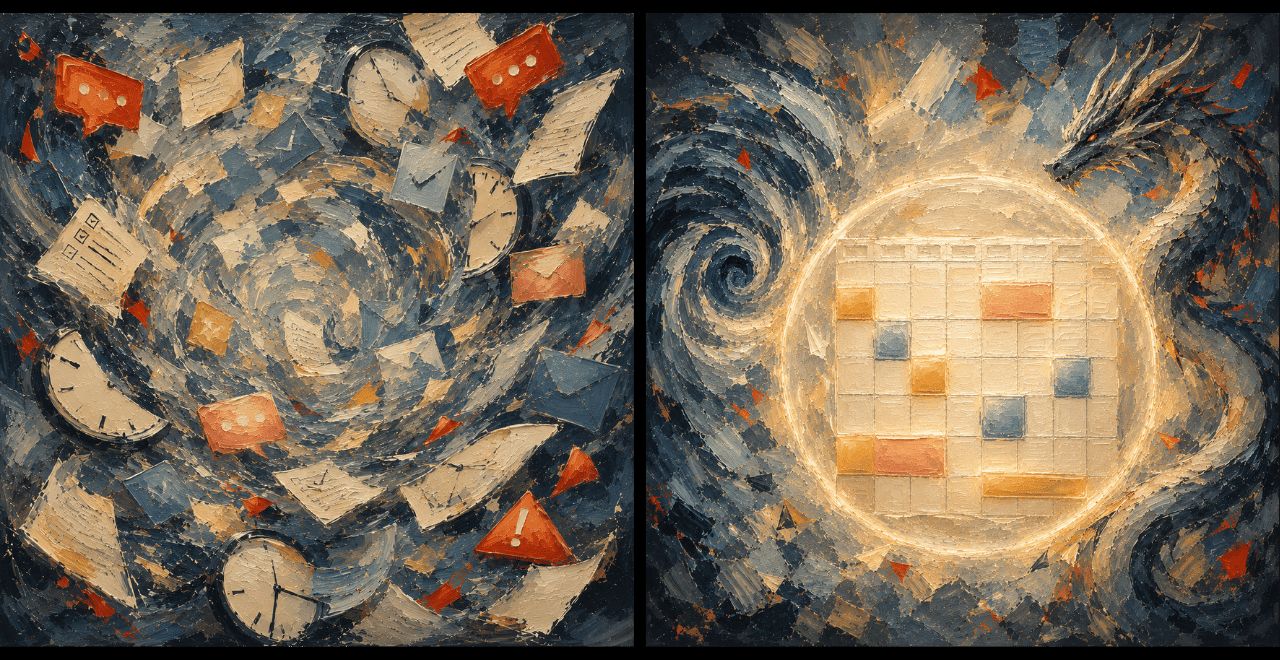
There are only 24 hours in a day, and what feels urgent is not always what actually matters. Someone asks to pick your brain for just 15 minutes, someone else sends an urgent email, and before you realize it, your week has filled up around you. Meanwhile, the things you care about most can get postponed because they don’t demand your attention with the same urgency.
That’s why I practice what I call timeshielding. At the beginning of each week, I protect time for my key priorities. Right now, those include collecting data for a study at the ADHD research lab, coordinating the kitchen renovation in my new house, and preparing for the September relaunch of the Ness Labs community.
Timeshielding means protecting blocks of time for what matters to you without assigning them a specific task list. You might protect time for research, reading, creative exploration, or simply doing nothing. This differs from timeboxing, where you assign a specific task to a fixed period.
This structure gives your priorities a place in your calendar while leaving enough flexibility to respond to your energy and attention in the moment.
That flexibility is important because productivity is constrained by cognitive bottlenecks. You can’t sustain focused attention indefinitely or work at the same energy level all day.
The point of timeshielding is to work with those limits rather than pretend they don’t exist. Here are three ways I use this approach to protect what matters:
1. Shield your priorities first. At the beginning of the week, identify what matters most and reserve time for it before other commitments take over. When something overlaps, consider moving the new request rather than automatically giving up the time you protected.
2. Work with your energy. Avoid filling every hour with predetermined tasks. Leave some flexibility so you can adjust based on how you feel. A burst of energy might be better used for creative work, while a lower-energy period may be better suited to routine emails.
3. Protect recovery too. Breaks and rest are easy to sacrifice because they can look unproductive on a calendar. But research shows that sleep deprivation negatively affects performance, so protecting time to step away and wind down is part of sustaining meaningful work.
A calendar will always fill up if you let urgency decide what belongs in it. Timeshielding gives you another option: make room for what matters before your inbox gets a chance to decide for you.
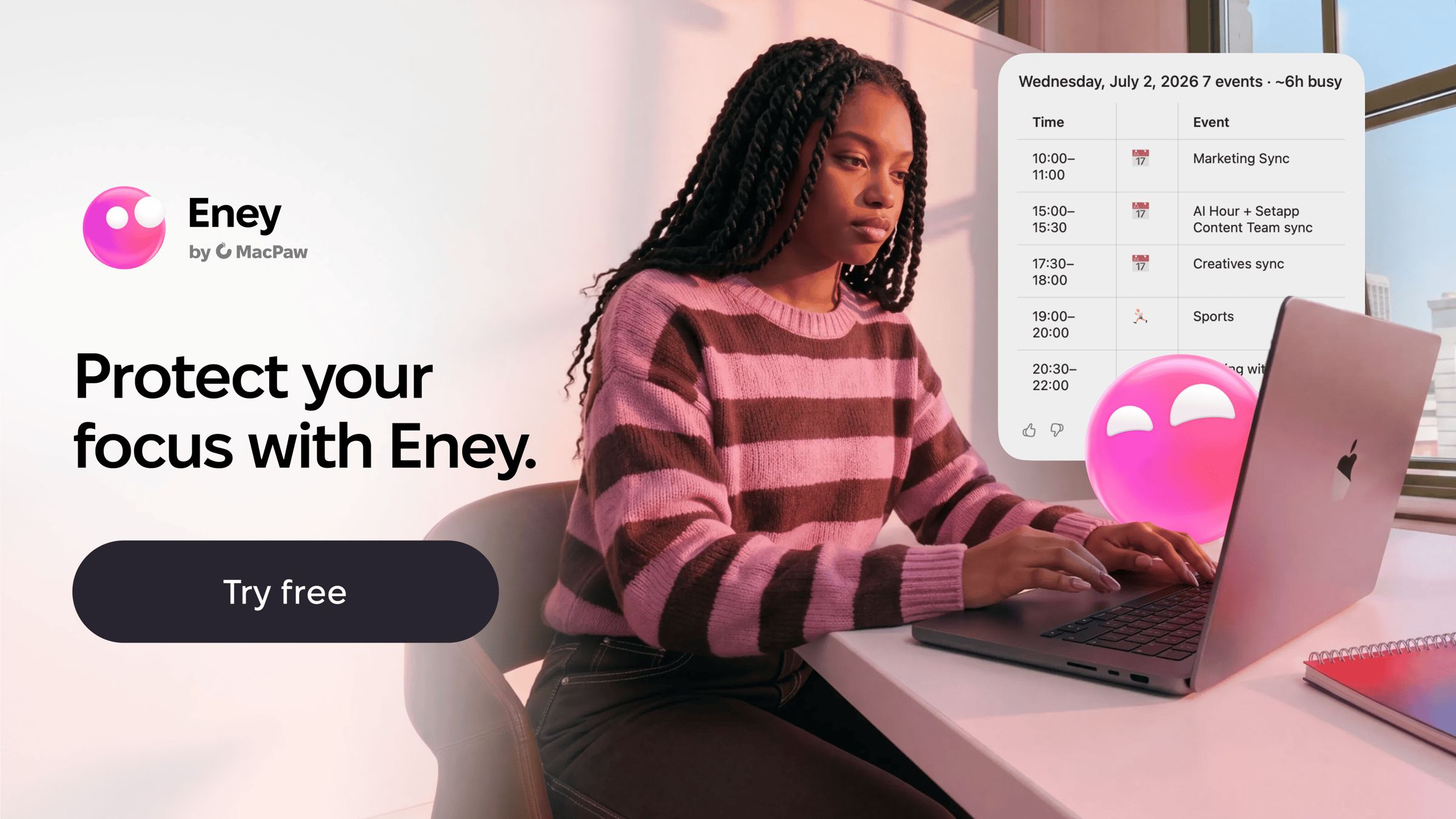
Eney exists to reduce that invisible cognitive load. Eney is a proactive AI assistant by MacPaw. Unlike chat-based AI that waits for prompts, Eney connects to Google Workspace, Notion, Jira, Confluence, Dropbox, and the other tools you already use. Once connected, it understands your work across them, prepares context before you need it, and completes tasks with your approval.
Many thanks to our sponsors and cross-promo partners for supporting the Ness Labs newsletter! Want to appear here? Please email support@nesslabs.com to learn more.
Try this week’s tiny experiment to practice timeshielding and protect time for what matters:
I will [shield one daily hour for my priorities] for [5 days].
Choose one area you care about and protect an hour for it each day without assigning a rigid task list. Use the time according to what feels most useful in the moment, while keeping the larger priority intact.
Want to dig deeper? Get your copy of Tiny Experiments.
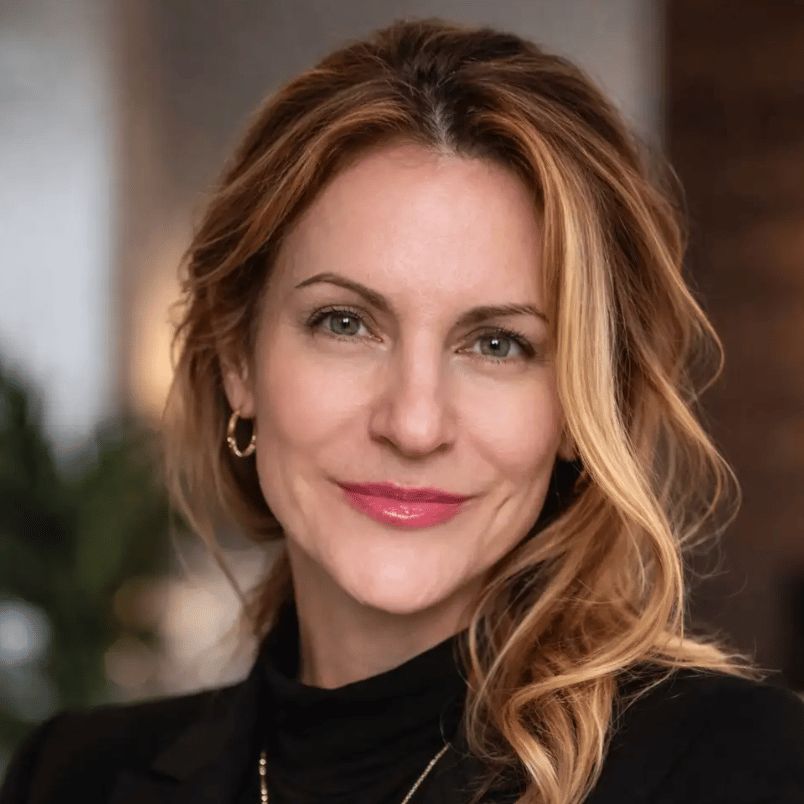
JANE SHORE
Each week I ask a curious mind about their habits, routines, and rituals. This week we learn from educator, artist and scientist Dr Jane Shore, author of People-Based Learning, which explores the question: what if learning began with people, not programs?
1. One idea that keeps you up at night? We’ve optimized learning for efficiency and accidentally removed the people it depends on. My work is all about how to design learning that lives in people.
2. One daily practice you can’t do without? I draw instead of take notes. If I can’t sketch an idea, I probably don’t understand it yet. Drawing slows me down just enough to turn information into something I can see, question, and remember.
3. One habit you wish you had? Sharing ideas before they’re ready. My academic training taught me to wait until things are polished, but I’m trying to practice giving more away – ideas, drafts, questions – while they’re still forming.
If you enjoy the newsletter, you’ll love our community of curious minds conducting tiny experiments within a safe space and learning together. Here is an overview of upcoming events (full calendar):
• Find clarity in times of transition. In this guided session, Gosia Fricze will help you explore the uncertainty that comes with transitions, how change can cloud our thinking, and how to find clarity when life feels in-between.
**• Protect your mental health at work.** In this one-hour workshop, Adina Dinu will teach you the work factors that undermine your well-being, the differences between stress, burnout, and trauma, and healthy ways to respond to stress and adversity at work.
**• Make progress on your projects.** Join Kathryn Ruge for our Monday ‘body doubling’ coworking session to work on personal or work-related projects that you want to make progress on, covering all timezones. Ethan Miller is also hosting a cowriting session on Sunday this week.
**• Improve your knowledge management system.** Join our next PKM meeting where we learn from one another through sharing how our systems work in the real world and give new PKM users a leg up.
**• Host your own workshop.** Do you have an idea for a short presentation and Q&A or a workshop you’d like to trial? Test your first iteration in the Ness Labs community and get feedback. We promote all sessions here in the newsletter.
All of these and future events are included in the price of the membership (only $49 for one year), as well as access to our courses, workshop library, and a dedicated space to track your tiny experiments.
Until next week, take care!
Anne-Laure.
You received this email because you subscribed to the Ness Labs newsletter. “-ness” is a suffix that means “state of being”, as in aware_ness_, mindful_ness_, conscious_ness_. Ness Labs is a playground for curiosity – a place where you can learn how to experiment with ideas, explore creative projects, and reflect on your progress. Of course I don’t want to see you go, but you can unsubscribe at any time. If you do leave, I’d love an email to let me know what I could do better to improve the newsletter. Alternatively, you can update your profile to use a different email address. © Ness Labs, 600 1st Ave, Ste 330 PMB 92768, Seattle, WA 98104-2246.

