
Curating the internet, weekly.


Sponsored by

Good morning! It's Sunday, Aug. 9, and welcome to our Sunday Edition. Today marks 81 years since the US dropped an atomic bomb on Nagasaki, leading to the devastation of tens of thousands of people and the surrender of Japan in WWII. To reflect on the first and only uses of nuclear weapons in armed conflict, we revisited the program that made it happen, the Manhattan Project.
Below that, explore an unplanned crash into the moon (News in Context), religious diversity in the US (Civics), a French town experiencing LSD-like symptoms (Etc.), and much more.
📖 Our Sunday edition digs deep into the context and rabbit holes behind the news. We'll be back with our regular Daily Digest tomorrow through Saturday.
PS—Did someone forward you this email? Join 4.7 million insatiably curious readers here, or click forward to share with friends. Feedback is a gift, and we read every email. Please share your thoughts with us at topics@join1440.com.
The Atomic Buildup
The Manhattan Project (watch overview) was a top-secret US government program that developed the world’s first atomic weapons. In 1938, scientists in Germany discovered nuclear fission—the splitting of an atom that releases enormous energy. Fearing Nazi Germany might build an atomic bomb, President Franklin D. Roosevelt authorized advisory committees to study nuclear weapons—efforts that evolved into the Manhattan Project in 1942.
> Albert Einstein wrote a 1939 letter warning President Roosevelt about the possibility of atomic bombs—a decision he later regretted. (More)
> Atomic bombs release nuclear energy by splitting large atomic nuclei. (More, w/video)
The US Army Corps of Engineers oversaw the project under the direction of General Leslie Groves, with physicist J. Robert Oppenheimer serving as scientific director. Work took place across three primary sites where scientists produced the fissile material and designs for the first nuclear weapons.
> The Manhattan Project's three key sites: Hanford, Washington, Oak Ridge, Tennessee, and Los Alamos, New Mexico. (More)
> Meet the scientists who worked on the Manhattan Project. (More)
> Cillian Murphy won best actor for his portrayal of Oppenheimer. (More, w/video)
The project culminated in the Trinity test in July 1945, when a plutonium implosion bomb was detonated in the New Mexico desert. The Manhattan Project cost an estimated $27B in today’s dollars and ushered the world into the atomic era, reshaping global warfare, diplomacy, and the balance of power.
> On August 6, 1945, the Enola Gay dropped the first atomic bomb used in warfare on Hiroshima, Japan, killing at least 80,000 people instantly. (More, w/photos)
> The death toll of the atomic bombings in Japan remains disputed, with most deaths occurring within the first day. (More)
Discover more:
> US and Soviet/Russian leaders have previously agreed to arms control treaties, but rising tensions have caused deals to expire in recent years. (More)
> Nearly 90% of the world's 12,187 nuclear warheads are held by Russia and the United States. (More, w/chart)
> China doubled its nuclear stockpile between 2020 and 2025, with plans for further expansion. (More, w/video)
Sponsored by Apple Card
Unpacking Summer’s Hottest Travel Hack
It’s the thick of summer, which means it’s also the thick of vacation season. But before you jet off on your next adventure, you need to check out our new favorite travel hack and make sure you aren’t planning any trips without the proper tools. So what is it, you ask? Apple Card.
See, Apple Card is the ideal credit card for travelers. It has no fees, period (including foreign transaction, hidden, or late fees), which makes it perfect for your international trips, plus the ability to earn unlimited Daily Cash back on every purchase, regardless of where you are or what you’re spending on.
Got a trip coming up soon? No problem—you can apply for and use Apple Card in minutes with Apple Pay. Apply now and see your credit limit offer upfront with no impact to your credit score.
Terms apply.
Please support our sponsors!
News in Context
1440 brings you the knowledge and context behind the week's stories:
Dr. Abdul El-Sayed won the Democratic nomination in Michigan's Senate primary on Tuesday, the most expensive Democratic Senate primary ever. (More)
> Voting rights expanded from 6% of Americans in 1789 to nearly all adult citizens today.
> How to distinguish between a good poll and an unreliable one.
Three wildfires raged in the Spokane, Washington area this week, causing over 65,000 people to evacuate. (More)
> Explore a real-time map of fine particle pollution from wildfires and other sources.
> Wildfire containment refers to what percentage of a fire is surrounded by physical barriers.
A SpaceX rocket stage crashed into the moon on Wednesday, scientists report. (More)
> Explore a collection of moon interactives from NASA, including a 3D lunar surface explorer.
> Previous studies of moon craters suggest that Earth was pummeled by asteroids for millions of years.
Geneticists successfully created two allergen-free beagles using gene-editing technology in a world first. (More)
> Watch a breakdown of the incredibly diverse canine family tree.
> Why do dogs smell each other's butts?
> Sunday funday: See beagles belonging to 1440 staff here, here, and here.
1440 Civics: Religion in the US
In 2026, the US ranked 32nd globally in religious diversity (See overview, w/charts), though it ranked first among the 10 most populous nations.
> See the religious breakdown of your state and how it compares to the rest of the country. (More, w/interactive)
> Every single state constitution in the US references God or the divine, though the federal Constitution does not. (More)
> Explore the patterns of restrictions on religion around the world. (More)
Want more? Explore hundreds of our favorite Civics-related resources.
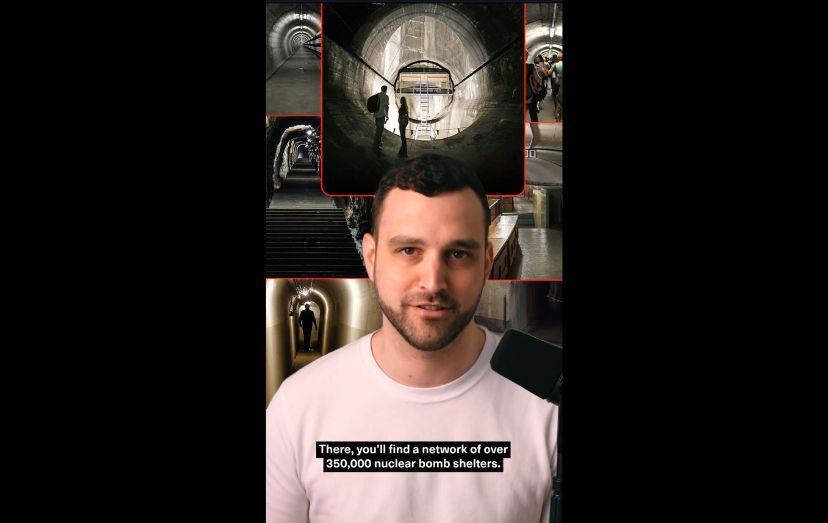
☢️ Switzerland's Nuclear Bunkers
A country of nine million has space in a nuclear fallout shelter for every single resident. Join 1440 as we explore how Switzerland has applied state capacity to the apocalypse—and what their recent reinvestment in the bunker system says about the state of the world. Watch the video here or click below:
Sponsored by Apple Card
Travel Smarter With Apple Card
Picture this—you’re in a foreign country, having the time of your life, when you get a credit card alert for a 2% charge on your expensive dinner. Gulp. It’s the dreaded foreign transaction fee.
Now if you had Apple Card, this would never happen. With no fees, period (including foreign transaction, hidden, or late fees), plus the ability to earn unlimited Daily Cash back on every purchase, it’s the perfect card for travelers. Plus, you can apply for and use Apple Card in minutes with Apple Pay. Apply now and start earning Daily Cash back, which is real cash that never expires or loses value.
Terms apply.
Please support our sponsors!
Etcetera
Explore the digital collections of over 4,000 art museums.
The time a small French town was likely overtaken by the fungus that ultimately led to LSD.
Can immersing yourself in a relevant book, or "bibliotherapy," help improve mental health?
... And find your new favorite novelist with this literature map.
Polar bears have black skin, but an optical illusion makes their transparent fur look white.
The vast majority of America's food allergies are triggered by nine foods.
🫶 Humankind: Woman fulfills her dream of becoming a flight attendant at age 51, setting an inspiring example for her granddaughter.
Around 27% of all PINs are one of 20 combinations, including 1234, 1111, and 0000.
Unpack Delacroix's renowned French Revolution painting "Liberty Leading the People."
Read compelling quotes about marketing from advertising tycoon David Ogilvy.
How social media is impacting children's attention spans.
See a breakdown of the bestselling visual art mediums, with paintings accounting for 59% of sales.
The bullwhip was the first human-made object to break the sound barrier.
Historybook: The US drops atomic bomb on Nagasaki, killing over 40,000 (1945); Singer Whitney Houston born (1963); Actress Sharon Tate, four others murdered by Manson Family (1969); Gerald Ford becomes US president as Richard Nixon resigns (1974); Musician Jerry Garcia dies (1995).
"You do not merely want to be considered just the best of the best. You want to be considered the only ones who do what you do."
—Jerry Garcia
Join 4.7+ million insatiably curious news readers:
The "1440 Explores" podcast:
Weekly 1440 Topics newsletters:
Science & Technology (Tuesday)
Health & Medicine (Wednesday)
Business & Finance (Thursday)
Society & Culture (Saturday)
Behind the Name. Why 1440? The printing press was invented around the year 1440, spreading knowledge to the masses and changing the course of history. More facts: In every day, there are 1,440 minutes. We’re here to make each one count.
Want to connect with 4.7 million insatiably curious minds? Become a 1440 partner here.
1440 Media 222 W Merchandise Mart Plaza, Suite 1212 Chicago, IL 60654
Copyright © 2026, 1440 Media, All rights reserved.

Unsubscribe from this email or update my subscription preferences.